Showing posts with label George J. Gaskin. Show all posts

Tuesday, September 25, 2018

Tracking those pianists and questions

Since I've become so dedicated to studying and identifying all those early studio pianists, I've come to the realization of how frustrating it's become to keep track of them all. Now that the major parts of my Hylands studies have passed and I can now utilize, it's become ever frustrating to keep track of where Hylands was at different times and when he was and wasn't in the studio. 
Hylands will always be a source of madness for me, that's just inevitable. 

So, as of now, here's a list of the pianists and potential ones in date order(by the time they started making records) that I have to study and keep track of:
Edward Issler(1889)
(1889)
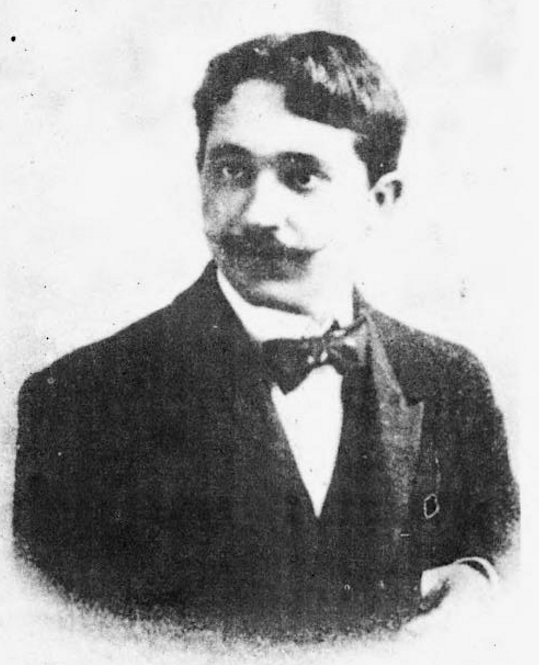
Fred Gaisberg (1889)
Frank P. Banta(1892)
Fred Hylands (c.1897)
Fred Hager(1898)
and Justin Ring(c.1899)
I must admit that this list isn't everyone, but I do also study Christopher Booth, as he is an essential component of those early studio pianist styles, as he's on so many early Victor records and was so well respected among the other pianists. 
As I dig deeper into identifying these pianists, the definitive understanding becomes much less clearer; that's rather the opposite of what I'd like to happen as I learn more. 
Of course, understanding Frank P. Banta's recording history is the easiest of this group. We know now that Banta started in 1892 at North American/Edison, under the training and supervision of Edward Issler. After the fall of North American in 1894, Banta remained at Edison and recorded for more regional labels with his orchestra, as this is where we get records like these:
In 1896 Banta returned solely to Edison, but soon he took a sub job at Berliner and remained on and off with them until 1900. In 1900 Banta, along with Arthur Pryor, joined the newly formed Victor company, and he took his Metropolitan orchestra from Berliner to Victor with him. Until 1903 Banta remained at Edison and Victor only, until he died in November of that year. 

Pretty direct isn't it! Banta's rather easy to identify in terms of piano styles, and his lineage in record companies entirely makes logical sense depending on what was the most stable at the present time. Banta was a union musician, so many of his moves from company to company follow a unionist mindset.Even with this very straightforward information, I still have a few essential questions recording Banta. 
Why is it that "Banta's orchestra" that recorded in the mid 1890's sounded outstanding, but Banta's "Metropolitan orchestra" sounded so awful?
Really take a listen to those Banta's orchestra records, they're really really good! He had some great musicians in the mid-1890's, seems he really took after his studio teacher Issler. Here's another one from around the same time as the above example:
Now that you've heard that, here's one of the worst Metropolitan orchestra examples I know of:
What happened?
Who knows...It's one of the greatest mysteries to me regarding the brown wax era. 
also...
Did Banta write the music to "The Laughing coon"?
Banta was another one of those studio sharks who came to George W. Johnson's side when he needed it. But unlike Spencer and Gaskin, Banta stayed out of the serious issues like his abusive home life. Banta was wise to stay only in the music, but this begs the above question. In Tim Brooks' book Lost Sounds, he makes it very vague where the "Laughing Coon" came from, though he does make it very clear that Banta's name was on Johnson's original "Laughing Song". This is no small thing. As record collectors, and general enthusiasts of acoustic recording music, we see the many hundreds of versions of Johnson's "Laughing song" scattered all over the internet, and it can become annoying after awhile. The amount of takes of that song is quite tiresome for me to be completely honest, so I only listen to three specific versions on occasion. Even with all this, the tragedy and history that surround this bugbear of a song is worth noting. The fact that it was written down by Banta is quite significant. Sometime I really need to sit down with the original sheet music and see if there are any curious characteristics in the written accompaniment that are fit for Banta. This piece proves Banta's standing in the Edison studio, and that he reached out to Johnson in a way that was unique, in comparison to the more capitalistic approaches of Gaskin and Spencer. I would definitely say that the evidence leans toward Banta writing down "The Laughing Coon", as it's got the same kind of structure melodically as "The laughing song", and the takes I've heard by Banta are very clean and definitive, as though he wrote it out exactly the way that he's playing it. The exact arrangement is also very similar to the earliest Banta accompaniments we know of, such as the strange 1893 ish record I was raving about for its swung syncopation:
So with this in mind, I would guess that Banta wrote down the arrangement of "The Laughing Coon" around the same time he did the "Laughing song", 1894. In thinking of these questions about Banta, I'm really hoping to sometime find out that he wrote out the music for "The Laughing Coon". Another piece of evidence to lean toward this is the fact that at Edison other artists like Cal Stewart took on this song with Banta's accompaniment, but this didn't happen at Columbia. 


The most difficult pianists to identify at this time are definitely Hager and Ring. With Hager I have some kind of foundation as to what his piano characteristics were, with Justin Ring however, there's very little to almost nothing. One thing is for sure though, those two sounded similar, no matter which style belongs to whom. Luckily with these pianists, I can group them together based on the record company overlap and time frames. Issler and Banta go together with Schweinfest, and Hager and Ring go together. Hylands is a stand out from the rest of course... There are a few Ring compositions floating around out there on records, to give us some kind of idea of his character in terms of rhythm and how he saw music fit together. Luckily with Hager, there are many more examples of written music and orchestra arrangements to help piece together a very dense and educated style. 
Hager's style was a crazy quilt of all the pianist styles on records in the 1890's. He clearly listened long and hard to all those pianists, and fully took advantage of his access to records from his connections in the business. He likely heard a lot of those nickel-coiners in the early and mid-1890's when they were the hottest ever, and became fascinated with them and the music that he was hearing. By 1896 he eased his way into a few regional east coast record companies, eventually by 1898 making his way to being a gold ticket for those who read and wrote for The Phonoscope. He rose up the recording food chain faster and higher than Fred Hylands ever did. Without doubt, Hager had the charisma that not even Banta could have, and that's really saying something, considering all the kind words the old studio stars had for Banta. Hager bridged the worlds of Rag-Time and opera with his style, with those very dense chords that sound really awful on some records, and the very quick technical strains of octaves to embellish the singers. For a rural Pennsylvanian son of a locomotive engineer he had quite a hot style. Occasionally his style outdid Banta's and Hylands'. 
With Hager we get everything, just like how he lived his life in music, always changing with the times and seeing beauty in everything. We get the hot stuff like these:


Around the same time we also get painfully beautiful violin solos of his like this one(with Hylands!):
I'm going to be completely honest, the first time I heard this record it made me cry. 
But there's also really upbeat and ear-worm inducing operatic gems he recorded on piano:
I've awakened from sleep with this stuck in my head multiple times, thanks Hager!

It's the same pianist folks! This is the wonder of Hager, his ability to remain distinct throughout styles from the lowest of low down to the highest of high class. 
What about Justin Ring?
Well, that's where it gets a little more complicated. One thing I know about Ring's style without even having much to piece together sonically, is that it's weird, and rhythmically similar to Hager's. Ring's rags are very unique and melodically ramble sometimes, but that's not a bad thing like it usually would be. What's clear from Ring and Hager's music is that they definitely were playing a lot of the more obscure and underground rag-time of the day. By this, I would mean Scott Joplin pieces, and other mid-western rag composers(by saying this in regards to Joplin I am not attempting to demean his musical standing or composition in any way, I'm putting this in the context of what was being recorded before 1906, before "Maple leaf Rag" was recorded and other Joplin pieces were recorded in the years afterward. Joplin's Texas-Missouri style was not often played in the East before 1910). In considering this, it was Hager and Ring that decided to record such hot rag-time rarities as Joplin's "Wall Street Rag", "Jungle Time", and "Possum Hall Rag". Clearly these guys got their rag-time from the source, and didn't shy away from good music, regardless of the circumstances of its publication. Considering this background in true hot rag-time, Ring's rags reflect bits of that, as well as his classical background as the son of a musician:
I know little about where Ring was outside of the Zon-O-Phone studio (at least before 1910), though since he and Hager were virtually inseparable it seems, it wouldn't surprise me if the two of them were stuck in the studio almost all the time while working at Zon-O-Phone. 

I still need to find more information about Ring's work outside the Zon-O-Phone studio, but for now, he seems to have been stuck there much like Banta was at Edison in the late-1890's. In the picture above, Ring is labeled as the orchestra accompanist, meaning that he's that pianist on most of those Hager's orchestra records, at least as long as Hager had a pianist in the orchestra. I'll just keep listening to those Zon-O-Phone's to try and figure out the two distinct styles of Hager and Ring, i still haven't heard enough of them to completely piece together two styles. So far, I only have one partially completed, thanks to the reasonable amount of Climax records that are floating around online. This particular record is a perfect Hager example:
https://www.youtube.com/watch?v=KvNiWY1Cj3c

The piano playing on this can help define that point I made earlier about Hager and Ring digging out and playing some of the most authentic and detailed rags(like "Maple leaf Rag" and "Jungle Time" by E. Philip Severin).

With all this written here, it's clear I still am figuring out all this pianist stuff, though I have been focusing more on Hager and Ring lately, as that's where more needs to be uncovered and understood. 


Anyway...
Before I close out, I'd like to share a mediocre transfer I made of my most prized brown wax. back in July, I finally got a phonograph to play my cylinders on; a machine that was made for brown wax of course!
With that machine I got a late-1897 early 1898 Columbia of Gaskin singing "Drill ye Tarriers Drill", and it's definitely not a take that's online anywhere. Here you go:
https://drive.google.com/file/d/1Tvo7CNJ-j1twYEyWwLyuzDvQpp39Owcm/view?usp=sharing
This cylinder was unmarked when I first picked it up, so of course I wanted to know what it was, to know whether it was worth my money. Damn well it was! It has two chips on the surface, but it plays just finely otherwise. This particular take features not only Hylands playing interesting cake-walk accompaniment with a syncopated jig at the end, but it features Russell Hunting speaking just after the 2 minute mark. I have heard a similar record to this one online, in fact it may have been recorded on the same day or close in time to this one, here's the twin record:
https://ia801409.us.archive.org/12/items/GeorgeJGaskin/GeorgeJGaskin-TheBestintheHouseisNoneTooGoodForReilly.mp3
That's part of where I got a better grasp of the date for this record. These two sound awfully similar, and definitely have the same pianist on both. 
In my next post I will exhibit another brown wax of mine, just as interesting and unusual, if not more so than this Gaskin gem. I will speak of my very productive meeting with John Levin in the next post, as there was quite a lot to process from that meeting...


Hope you enjoyed this! 


Friday, April 13, 2018

Charles Asbury and New Transfers

It seems Archeophone is back at it again, not like they aren't always. This next record that they're working on now is just phenomenal. I was looking around on Facebook this week, and came across a bit of samples for the new record that Archeophone is planning to release. This new record is only a two sided 45, but what's on it is tantalizing. For a while, I have highlighted the importance of Charles Asbury's records, or at least the one that is currently online. In terms of Rag-Time historians, his records are among the best case studies of the earliest examples. The one we've all heard online is his 1894 "Haul the Woodpile Down", and it never fails to amaze the Rag-Time historians. 
The only image I had seen of Asbury was a crude drawing from the December 1892 issue of The Phonogram. On that page, Asbury is surrounded by all the favorites, such as Len Spencer, Russell Hunting, John York AtLee, etc. It was surprising to actually see Asbury there in that bunch of recording stars, since we who know about him wouldn't think of associating him with them. 
Maybe we're mistaken by doing that? 

Here's that picture I'm talking about: 
It's pretty crude, and the quality of the scan isn't that great...
Now here's the thing about Asbury that's intriguing, there's nothing known about him! 
I remember years ago attempting to do some digging on Asbury, but was led nowhere. I did eventually find someone who had done thew same thing and assumed they had found him, a minstrel performer and banjoist born around 1852-53. The evidence and details were a but questionable, but it was and still is hopeful to see an interest in his mystery. The fact that his records are so good, and are such outstanding outliers to the other "coon song" singers, is what makes him attractive to record scholars. His records are nothing like the authentic rugged records of George W. Johnson, or the educated primitive nature of Len Spencer's(before 1897). Asbury's voice and banjo playing sound more like George W. Johnson than anyone else, but here's a thought...
Think of Silas Leachman: 
We are for certain that Leachman learnt all the music he recorded by ear, never from music. With Leachman we also get the benefit of his upbringing in Kentucky at a prime period of time, which is essential to his unique style. In keeping in mind Leachman's method of learning new music, we need to know what distinct characteristics to his singing and playing(of piano) would indicate this. 
It can be hard to tell whether someone learns music by ear, but being someone who does that myself, I can catch the signs. 
One important thing to notice is if the lyrics are switched around or are phrased differently from the written ones. This is why I almost always check to lyrics to certain songs to compare. This sort of thing is all over the place on Leachman's records, more particularly his brown wax records made at home. His records such as his 1895 or so recording of "old Uncle John" are perfect examples of how he switched around the lyric phrasing, even the time signature in the chorus. In the written music, the chorus is in 6/8, but on Leachman's take, the chorus is in 3/4. This sort of thing is a signature to leachman, even on many of his later Victors, all of these things are present here and there. But of course why am I saying this? We are certain that Leachman played by ear, it was written about in that long Chicago Tribune article from 1895 about him. In Leachman's case, we're just trying to make sure that the things correspond correctly to confirm it. 

What has all of this to do with Asbury?
Actually, quite a lot. 

After being able to hear a little more of Asbury this week, the ideas that I've formulated about Leachman have transferred to Asbury's style. The only reason I have any idea of this is because he had all the signs that would indicate learning by ear. Another important factor to this theory is the fact that the performer bring to the recording horn tunes that were never published, or cannot be traced historically. This is similar with Billy Golden and George W. Johnson. However, Johnson had the privilege of having Frank P. Banta to actually write down the songs that were his specialties, and arrange them exactly as Johnson performed them. 
Asbury was alone with his music, performing tunes that were rare even to the most popular recording stars. The very unpublished(or impossible to trace) tune of his I'm thinking of is "Haul the Woodpile Down". Wherever the tune came from, it's a very old, perhaps early American, song with elements similar to "Amazing Grace" and songs related.
Here's the record just to refresh the memory:
http://cylinders.library.ucsb.edu/search.php?queryType=@attr+1=1020&num=1&start=1&query=cylinder8103

 With this in mind, the sample of Asbury singing "New Coon in Town"(released by Archeophone this week) already exhibits these essential elements of ear learning. The chorus has mixed around phrases and added words, without the complicatedness of the original song published in Chicago in 1884. This was a popular song as the "coon song" era started to take shape, so it doesn't particularly come as a surprise that he recorded this tune. The way he plays the song is particularly interesting, since it's nothing like the way that all of us Ragtimers play it. One of my good friends listened to the bit of the "new Coon in Town", and immediately assumed it was a different tune with the same way, but that's not true. That is indeed the same tune that was often quoted, including in an article about George W. Johnson's domestic troubles:
Yep, those are the same lyrics, but switched around as expected. Just as Leachman was, Asbury also had all the aspects of a fully natural musician, with near perfect vocal pitch, and a very attractive style of banjo and singing. 
All of this makes Asbury more tantalizing for sure, though keep in mind that all of what I just said about him is just a theory, and none of it may be true. Hopefully there's at least a basic level of information on him in the notes that accompany the record Archeophone is putting out next month. 
I just can't wait! The samples are just unbelievable!


Now to move on from well hidden mystery. I said in the last post that I would do some more digging in Santa Barbara's new transfers, and in the past few weeks, that's exactly what I did. The excitement is never ending now that they're gradually putting up random brown wax transfers that have been sitting there on the website without any means of hearing them. Since there was so much to talk about on just a single Spencer record, there's actually more Spencer records put up since I dug deep into that c. 1895 record of "Mamie!...". Before I get into those Spencer records, I should most certainly dig into Hylands records solely. 
The amount of good Hylands examples has almost doubled on Santa Barbara's website, which is absolutely fantastic. There's one particular example that stands far better than the others, and it's this seemingly modest one:
http://cylinders.library.ucsb.edu/search.php?queryType=@attr+1=1020&num=1&start=1&query=cylinder14585
Never have I heard such mastery from Hylands. We can hear how well he had perfected the Banjo imitation style he supposedly played. What's genius about this particular take is that he's rarely playing the actual melody with Schweinfest, but he's playing accompanying melodic lines and quick banjo imitation patterns all over the piano. It's also rather shocking to note that the rather slow(but perfect for a cake-walk) tempo is kept constant throughout. This isn't often the case with early examples of authentic improvised Rag-Time. It's records like these where we are reminded why we love Hylands, and it's for that distinct and weird Rag style that is easy to pick out from the others. Of course, after hearing such recordings like this from 1899-1900, it makes me more anxious to hear this:
Such recordings as the subject matter here are good explanations for such compositions by Schweinfest of all people. 
Speaking of Roger Harding(the publisher of the Schweinfest piece), this reminds me of another new transfer that includes Harding. At last, there are a few different takes of "Little Alabama Coon" online. The more takes I've heard have been by Gaskin, which are the best ones, because of that horrid scream he does on each one. While the same little sketch is one every take, one thing can be assured always different, the end piano solo. This particular take is by the Greater New York Quartette, which included Steve Porter and Roger Harding on this record specifically. 
here's the record:
http://cylinders.library.ucsb.edu/search.php?queryType=@attr+1=1020&num=1&start=1&query=cylinder13403
To be honest, I only listened to this the first time because I knew there would be a dance part piano solo at the end. Supposedly Issler put together the arrangement that we hear Gaskin do, with the song and dance part and everything. That makes no different here however. That solo Hylands plays at the end is perfectly in his style. We even get the bonus of him playing those rare walking bass octaves, which is a distinct characteristic, but one that isn't always present. Like almost every solo by any early studio pianist(after Issler), it has got to be a quote of another song, but this one has me stumped. Most of the time it takes a few listens to get the more obscure musical jokes of the studio pianists. Also, listen to the very end, there's a loud thump! as though something fell over and a voice acknowledging the crash. It's clearly a mistake because it's so abrupt and it caught by some other voices far back there. 

Since there 's another earlier take(the last one is from 1898 or so), that one should be exhibited too. This take is transferred too fast, but it's still Gaskin's original take, likely from 1893 or 1894, which is entirely valuable. 
That's Gaskin around 1895. 
So here's that transfer:
http://cylinders.library.ucsb.edu/search.php?queryType=@attr+1=1020&num=1&start=1&query=cylinder11763
There's that signature scream. I know he's supposed to be a little black kid, but this take is where it sounds absolutely the most hilarious. I'm learning overtime that Gaskin was weird, more so than any of us could imagine. A little Irish leprechaun of a man with lots of energy left vacant from so many slow songs. The wildness comes alive on records such as his 1893 ish "Little Alabama Coon". By the way, the pianist on that is most likely Issler, indicated by the year and circumstances of how around that time I've seen newspaper evidence of Gaskin performing that very tune with Issler. 

Now to move to something that's a little questionable for me. 
Now you all know how much I'm in love with Fred Hager, but I cannot stand his violin records. They are such an infernal racket, and are generally boring selections.
However, Santa Barbara put a few Hager records that are of more interesting selections. The first interesting selection was his "Rag Time Medley", which ought to be good, given the chances are very high Frank P. Banta is the pianist behind him. Here you go:
http://cylinders.library.ucsb.edu/search.php?queryType=@attr+1=1020&num=1&start=1&query=cylinder11744
Just imagine it, pretty Hager looking not too different from how he did above playing violin with Banta. What a beautiful thing to imagine...
There are a few reasons I can't stand Hager's violin records, one is that he's rarely in tune(that's my perfect pitch coming in), and that he slurs notes so much that some of them blend together and make it more out of tune. This particular record is rather entertaining because Banta is keeping the rhythm nice and constant, with added syncopation so complement Hager, but Hager trips all over the place. 
Though, they did seem to put up the best Hager violin solo I've heard so far, and it's from a bit later than expected. 
http://cylinders.library.ucsb.edu/search.php?queryType=@attr+1=1020&num=1&start=1&query=cylinder11385
I had assumed most of his violin records were from 1899 and 1900, but I guess 1901 still works out. At least Banta's still there behind him to keep him from tripping over. For such a virtuoso and matinee idol, you'd think that he would embody the long passed soul of Niccolo Paganini. Hager unfortunately was nowhere close to that, despite his musical status in music conservatories and with symphony musicians all over. He was better at arrangements and keeping bands together turns out. 

Seems we're getting warmer to Spencer, so how about some George W. Johnson? Johnson's records are always different, since the arrangements were basically only based on chord changes and weren't exactly melody driven, each take is very different. We may not exactly know the origins of Johnson's "The Laughing Coon", but it likely had something to do with Banta, just as "the Laughing song" had back in 1894. Of course, the take i'm going to use here is not one of the typical Banta Edison takes, it's another one of those ragged Hylands Columbia takes. 
Unfortunately, this take is transfered really quiet, likely due to it being played quite often in its life of 120 years:
http://cylinders.library.ucsb.edu/search.php?queryType=@attr+1=1020&num=1&start=1&query=cylinder16897
It's really hard to hear, but from what we can hear of the piano accompaniment, it's really ragged and has all of those signature early Hylands characteristics. If you know the song as well as I do, you should be able to keep track of how the song goes and what might be played at certain times. That's the only way I've been able to understand and pull apart this recording at all, since it's so worn out and quiet. Hopefully I will be able to almost completely transcribe the accompaniment on this record, because in the end, this one is certainly worth the time and effort. This may be a case of pieceing together if anything. 

All right, time to get to that new Spencer transfer!
These are obviously the most exciting new things for me, since Santa Barbara has had quite a few good ones listed for a while, and none have been transferred. Now little by little they're being put up, which is a great way to get them. The one in particular that has been a source of fascination is his c.early 1898 Columbia of "Kentucky Babe". It sounds like it could have been recorded in late-1897, but its most certainly in the early era of Spencer with Hylands(pre publishing firm I mean). 
http://cylinders.library.ucsb.edu/search.php?queryType=@attr+1=1020&num=1&start=1&query=cylinder11394
Unlike every other take I've heard of this tune, this take is quick and jumpy, rather than following the very theme, that Spencer announces at the beginning, of the song(Picanniny Lullaby). That unusual fact makes this record all the more charming though. The piano accompaniment was recorded really well, which makes for a nice balance of Spencer and Hylands, and that's always good. We can hear them both equally, which isn't always the case. I must note, since it peeves me, that Spencer's pitch is not great on this take either, it's too reminiscent of his pre 1896 records...All I can comment on that is that Hylands is there, and his influence of anything addictive is likely present. 
That may also be part of why the song was played quicker and more playful than the slow and calming that it usually was. Who knows, with Spencer and Hylands, anything's possible. 
But what about that accompaniment? Wow. Hylands plays pretty nice throughout the record, playing weird inversions and voicings of chords like usual, but at the whistling solo at the end---all hell breaks loose! The quick and complicated banjo imitation is entirely unexpected. He's playing so many notes it's hard to fathom. It's based on the banjo imitation form, whatever he's playing, but it's got all of those 32nd notes that he was known for. At least we have more evidence of his frequent playing of banjo imitations, this time before 1900, and rather early in his collaborations with Spencer. Rag-Time scholars take note!


Anyway, there are quite a few new transfers I need to get to, but I've exhausted my immediate knowledge for the night, so I've got to leave it here. 


Hope you all enjoyed this!


Wednesday, February 14, 2018

Saturdays at Berliner and Little Swirls

Within the past few days, I've noticed some curious things. After doing some digging through Berliners, it is becoming more apparent that this label was the most accomodating for its artists. Despite rusty old Berliner himself presiding over the studio often, the days without Gaisberg were basically a mess. Gaisberg left the U.S. toward the end of 1898, and he rarely returned to the old studio, doing so perhaps twice a year at most after then. 
Amid the Berliner studies I've done recently, the specific Berliners that are of the most focus are the Berliners that Spencer made. As most of us know, Spencer joined the Berliner team rather late, as that was the first time Spencer associated with a non-Columbia affiliated Company. Most of his fellows joined with Berliner at the very beginning, that being around 1894 and 1895. Spencer was too busy running errands for the Emerson's and two timing with Columbia and U.S. to join when everyone else did. he didn't get on the Berliner boat until 1899, which is right near the end of their official existence. Hist first Berliner session was April 15, 1899. You can see what he recorded in the link below:
This was a pretty nice session, as I have heard one of the records he made that day. The first one was a nice one to start off with. 
Okay, yes he may have had his first session there Mid-April 1899, but he was there with the others of the Columbia staff the previous year, as that's what this picture documented: 
They all took a visit to the Berliner studio, and luckily we have hard evidence that Spencer was there, even if he did not record for them at the time, and didn't actually do so until a year later. 
Now here's the thing about Spencer's Berliner's that are interesting. The bulk of his Berliner records were made on Saturdays in April of 1899. It's strange to notice this odd pattern, and luckily with Berliner, all of the ledgers are left so we can observe this. A few of them were made on Fridays, and after April, but in general, he wasn't there too often. He made just enough Berliners to be considered a regular for at least a month. 

But why Saturdays?
And why April?

Well, the first question leads us into the theory world. One theory I discussed with a friend is that the Berliner staff was very slim on Saturday evenings and at knowing this, Spencer took advantage of this to come in and make bunches of records with his faithful accompanist Fred Hylands. The reason this was hypothecized is because of how strange and out of whack his Berliners are, they're quite different from his Columbia records recorded around the same time(if not some of the same days). They're much less tame than the Columbia's. That's saying quite a lot in terms of Spencer and Hylands. Those Berliner's are rather wild, and are strange in balancing. The balancing usually varies record to record, which is also unusual. Many Berliner records are strange in these same aspects, but the Spencer Berliners are especially interesting. Here's why:

His singing is not particularly the best on these...
The piano playing is all over the place.
Spencer doesn't seem to do the usual moving back and forth to balance the tones of voice. 
The piano playing is very pushy and sometimes out of sync with Spencer. 
Spencer dramatically changes his tone of voice through the course of one of them I've heard. 

All of these factors make the theory of slim staff plausible. These records may actually be the best examples of how Spencer and Hylands sounded when they were pretty out of it. Spencer was already not the best singer on the earliest records, but on these Berliners, his limited skill shines through like chimes on brown wax. The accompaniment is almost certainly Hylands, because of specific characteristics of blending with Spencer, though the style is a little misleading on a few of them, since it's Hylands at his weirdest. I've heard quite a few questionable Columbia's of theirs, but all the Berliners are far beyond those. 
Imagine it, the two of them(remember that they were publishing partners at this time) stumbling into Berliner's back door(in the picture above) after recording most of the day at Columbia. They greet Mr. Berliner, or whoever was there at that time, already a little tipsy from work earlier in the day, ready as ever to record a handful of hot coon songs. 

It's interesting that most of what Spencer recorded on those Saturdays at Berliner were coon songs, there was very little room for anything else. That further points to the pianist on those being Hylands. Even though it rarely happened, to a certain extent, many of these artists had to cater to the accompanist, even though they were basically just slaves to the performers and record consumers. When Hylands was still relatively new at Columbia in 1898, we hear a whole lot of records where he's practically featured behind one of the singers. Artists with so much adoration for Hylands, like Spencer, would have catered to Hylands' distinct style as well, Spencer's Berliners being the perfect example of this taken to a different level than his Columbias from the same time.  To add to the catering point, there are plenty of examples of this happening with Banta, such as on Denny's 1901 Edison of "Go Way Back and Sit Down". 
It would seem incomplete if I just spoke about all of these records and not have any of them here to listen to. 
I'm just going to list a bunch of them here:
"Hello Ma Baby"
(notice how pushy the piano playing progresses to by the end of the record)
"Whistling Rufus"
"You'll get all that's-a-coming to you"
(one of those other voices has to be Hylands) 
"You don't stop the World from Going 'Round"
These are all coon songs. All of the others I've heard are also coon songs. 
There are others, but I can't share all of them, and haven't heard all of them. That's a goal though at this point, hearing all of his Berliners(that were issued). Since he didn't make that many, it's possible to hear them all. The overall quality of the music varies so much from record to record that hearing all of them would be fascinating. 

One more thing to note, while speaking with a friend about the Spencer Berliners, it also was brought up how much inspiration Spencer took from George W. Johnson. Not at all had this crossed my mind before this conversation. It makes so much sense. What's good about Spencer is that we can often tell exactly who he's imitating on certain records. Throughout listening to him, I've been able to catch Ben Harney, May Irwin, and DeWolf Hopper. The distinct way that Spencer whistled(that you can hear on the record of "Whistling Rufus" above) is very similar to how Johnson whistled on his records. It's interesting to hear Spencer's inspiration, directly on the same record labels around the same time. Not too often do we get to hear the performers' inspiration in the brown wax era. At this point it makes more sense why Spencer really started performing early "coon songs" around 1894. Before then, most of his records consisted of popular, comic, and sacred songs. It wasn't really until he joined forces with Quinn and Johnson that he really started performing coon songs as we know them. Also, keep in mind that the era of the coon song began around this time as well. By 1895, Spencer was known as the premier "Ethiopian delineator" on records. It's curious to see such as close friend of his and fellow recording star being partially the source of his inspiration. 


Now onto something rather different...
Digging through that 1888-1893 book of handwritten ledgers has been a recent obsession. While searching around in that book for the first George W. Johnson recording dates, I was bound to get stuck in something else amid the pages. That's exactly what happened...I noticed a few curious things throughout the pages, and it has to do with the handwriting on them. 

From session to session, the handwriting on the pages seems to vary here and there, depending on who's actually in the studio that day. What I noticed going through those ledgers is that the handwriting is specific to who's in the studio, which can indicates a few things. Most of the time this would point to a certain person's handwriting being all over the place in the book, after a certain point in time. After flipping through months of seeing that mysterious Henry Geisemann(it was spelled a few different ways throughout) as solo pianist and accompanist, by August 1889 we see Issler mentioned almost every day consecutively. 
These pages are fascinating, and the handwriting on many of them, while it varies in quality, is always the same person on each page that Issler is mentioned. 
The neatness of the handwriting varies from page to page. Here are a few various ways that Issler was signed in the ledgers:
What a cast of writing!
These were all written by the same person, but who that is exactly is what I'm wondering here. The writing is all over this book of ledgers, and since Issler was often running the studio when he was there, it wouldn't surprise me if that just happens to be his writing. One thing I noticed about this writing, is that it has that lefty look to it, much like George Gaskin's or Len Spencer's. It may depend on the way that he had to write the information, say at an awkward angle, but the smudges are often suspect. Issler was certainly one I would put as possibly a lefty. He was brilliant enough, and enough of a maverick to be put in this very special category. It's somewhat funny how much the handwriting varies from page to page, sometimes being very neat and well drawn, but other times looking a complete mess that's nearly indecipherable. 

Oh the days of the rounds, it seems even the handwriting in the ledgers shows the wear and tiredness. 

So now that there's the possibility of Issler being a lefty, it seems he joins the group that Spencer fit into. We know Spencer was a lefty naturally, and later at heart. Spencer's known signing of other people's names also becomes evident when seeing the names of George W. Johnson and Ada Jones looking in that weirdly slanted kind of out of whack style. Considering Spencer's status, it's likely he wrote with his right hand much more often, but when signing for others, he switched around. Also, it's interesting to note the similarities that lie in the names that were written on Hylands Spencer and Yeager music to that slogan on their logo:
Forget that I ever said all of that extra weird writing on the logo was Hylands. That was all Spencer it turns out. All of those beautiful little wind-like swirls and the little flying heart(or whatever that is) is all Spencer's hand. 
There are those little swirlies!
Well there ya go. That solves the mystery of who was responsible for that funky slogan as well as the little pen sketches that we know so well on Hylands music. Spencer was weird, as we already know, and seeing those little pen sketches in greater context puts that into perspective. This is really making me hope that he did more pen sketches...
Thinking of how adventurous he was, that wouldn't surprise me. 

Anyhow, those little swirlies are just lovely. 


Hope you enjoyed this!


Saturday, January 6, 2018

Some more studio politics

Now that the holidays are essentially over, hopefully I can get back to making more blog posts, since it's still been hard to find more interesting information to talk about. 

Recently while searching around for quartet records, I came across a very strange record that hadn't even a record number to be found. The performer listed in the announcement of the record was given by the familiar voice of this chap:
Steve Porter.
So the creation of this strange record seems to have been facilitated by Mr. Porter, though the leading voice in this so-called "Diamond Quartette" would most certainly be George Gaskin. This record is centered around a parody on the hit "I'd Leave my Happy Home for You", but on the record it is called "I'd Leave my Job to Vote for You"(haha). 
Porter's announcement begins with this, 
"republican campaign song..." 
after the announcement the lovely and unmistakable Ragged playing of Hylands lumbers through. 
Of course on this record, there's a mot more than just Hylands and that Quartette. It seems that in this quartette, there was Gaskin, Porter, Roger Harding, and George Hargraves. This witty parody is rallying for William McKinley's campaign in 1900, and throws William Jennings Bryan and the Democrats in the dust. Sorry, it's one of those records I can't share out of kind courtesy to the owner. 
So, in past digging, I had heard of such campaign songs and rallying done by a certain group at Columbia. Those "clan" members at Columbia(let's say Harding, Porter, Spencer, Gaskin, Emerson brothers, Hylands at this point in time) were most certainly prominent politicos in their time. And with that, it can further be proven by the first Phonoscope section I found regarding their prominence in the Republican Party of New York. 
I hate that these are so hard to read. What a politico Harding was! Harding did quite a lot of rallying. well there ya go, there's that exact group from that record I've described. It's amazing to see an actual written account regarding the group, and then later finding a rather "wild" record by the very same group. Of course when digging all of this up after listening to the record, this brought back the research I did on studio politics a little while ago. Also, while doing some random digging on something else last night, I stumbled across something else telling about a certain someone.
It's clear that I talk about Fred Hylands quite often, and finding new information on him has been very slim the past 6 months. One thing that's fascinating about Hylands however is that his political view and morals seemed to have changed somewhat after a certain point in time. This change was a gradual process, and it took a few years for him to transition. Luckily, that recording and Hylands' associations in the recording business can lead us to assume he was on the dominant Republican side of the Columbia staff(keep in mind not every one of the boys and few ladies was on the same political side). Despite Hylands' more popular relations, he(much like Scott Joplin believe it or not) around 1899-1900 began associating himself with some of the underground people's and political activists. By these terms, I mean Socialists. Those progressive outcasts that were dreaded by every factory and corporation, yes, Hylands began flirting with members of these groups. 
I've made it clear that Hylands switched to the other side by 1904-1905 by becoming a leader with the White Rats, but it seems that a few years before that he was pondering the ideas that his progressive friends told to him. I had assumed some of his actor friends like J. Grant Gibson would have swayed him over, but actually, come to find out it was someone else familiar. 
Well, this "ranting Bill" is Will J. Hardman. 
(cartoon by me!)
Just last night, I went digging for some early roots of Rag-Time on the Johns Hopkins sheet music website, but stumbled upon something fascinating. So what has Will J. Hardman to do with Hylands' socialist streak? Well it seems I found an indirect answer. 
(the date on this one is 1886)
There we go! It seems I found another source of influence for this transition. 
Of course! It makes so much sense now. Hardman was a gifted wordsmith, and now it seems that my hypothesis of his friendship with Hylands was in fact true! I had assumed by how many songs Hylands wrote with Hardman in such a short period of time that they had a bond outside of their music. So at a certain point, Hardman must have explained his world view to Hylands, and since Hylands was already somewhat fed up with Columbia, these new ideas from progressive Hardman must have been eyeopening. Unfortunately, I know nothing on Hardman at all, but because of the age of the other pieces I've dug up, he was most certainly older than Hylands, probably a decade older as far as I can guess. That would put him at around 38 by the time he met Hylands. Without a doubt, in 1900, Hylands was keeping his rebellion and disenchantment well hidden, since he had to participate in many of those political gatherings that Harding organized. By the time of the publishing firm with Spencer collapsed, Hylands was essentially outcasted from the tight pact that the Columbia staff had in the 1890's. With the shunning however, came Hylands' opportunity to go the way he desired, and head off to become a "Knight of Labor". We know his first try left all his old friends at Columbia a little frightened while also made him the laughingstock of Columbia and the Broadway community. This Socialist leaning left some of his old Columbia fellows concerned, and it must have made Len Spencer roll his eyes. 
Spencer after 1900 went a different direction as well, he was still a solid Roosevelt Republican, but his entering into the business aspect of vaudeville took something out of him. Spencer was unhappy with the progressives like Hylands and the other Union men, and this must have worsened over time when he had to deal with quite a few scrambles regarding union members and leaders. Of course, before his "falling out" with Hylands, Spencer would have seen bits of these progressives, as Frank P. Banta was part of a musicians' union, despite the contradictory nature of his employers. 
Since Hylands' relationship with Hardman was relatively close for enough time, it's likely that Hardman was part of Hylands' political transition. Another thing to note from that sheet music cover I found, notice the other titles listed under Hardman's name.
"For one day of Turkey there's six days of hash" 
well well Mr. Hardman, that's an amusing title certain. The words above the title are also interesting:
"an injury to one is the concern of all"
What a Socialist remark that is. Much like the cartoon above, I can envision Hylands being hypnotized by Hardman's ranting, since his lyrics were perfect with Hylands' weird often drug-induced Rag style.(think about the multiple meanings for "hash" in the title listed above). Keep in mind that Hardman's lyrics to Hylands' songs are very weird. They're strange even for the time period, and weirdly poetic all the same. 
Really listen to those lyrics, they're funny but really weird and have a few nearly unrelated lines. 
Of course one can wonder about how Hylands and Hardman became friends, and of course my mind goes directly to them both being den ramblers(essentially the opium equivalent to drinking buddies), who were both second grade musician/composers with unique talents. Hopefully, someone will dig something up on Hardman sometime soon, the suspense of learning little bits about him through his music is starting to get aggravating. 


Before I finish, I wanted to share the two record related finds I got for Christmas. The first thing I saw was an original Columbia box from 1897 or so, and when I opened the box, out popped a bunch of the soft fluff that record companies used to protect their records. I had always wanted one of those beautiful pre 1900 Columbia boxes, as they were colorful and elaborate, much like the late-1890's was in a nutshell. 
There's the pretty old box. 
Now the record on the inside was also really nice too, because it's Dan Quinn singing "put me off at Buffalo" from around 1898 or so. 
I'm looking forward to hearing the thing sometimes soon, as it will likely be a varied round of this take:
There's the record and the box. 
And my gloved hand holding it correctly. 
So far I've heard three different takes of Quinn singing this song all on Columbia brown wax. I wonder how many rounds he made of it for Columbia anyway. 
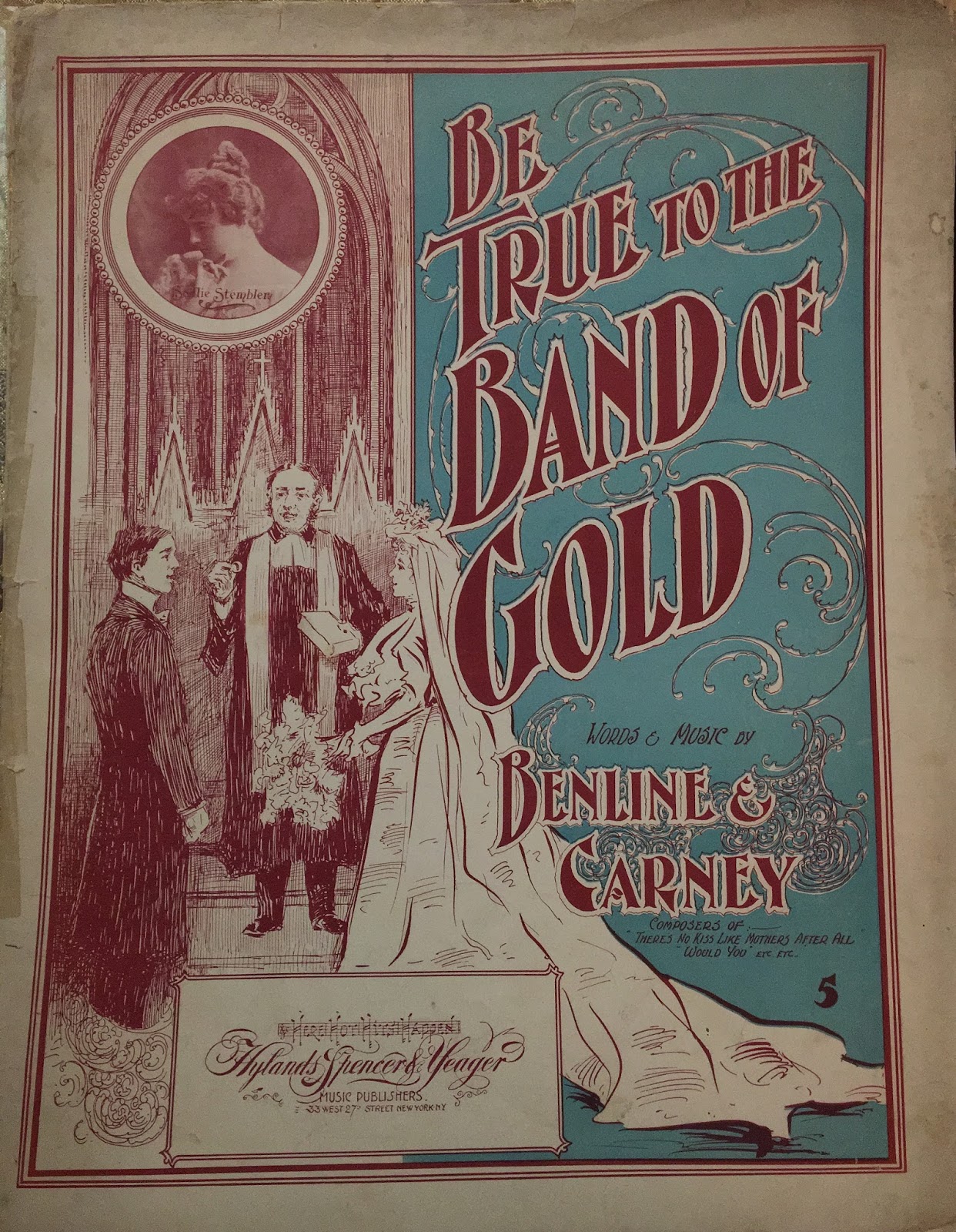
Other than that fantastic gift, I also unwrapped a piece of Hylands published sheet music. He did not write it, but it's another Hylands, Spencer, and Yeager piece, which is always worth my time and money. Of course it's not one with Dan Quinn or Spencer on the cover, but it's about the next best thing. 
there ya go. 
Another Hylands Spencer and Yeager piece is always welcome in my sheet music collection. Any time that certain lady is on a Hylands piece is always interesting to me. 
So I've seen her on three Hylands sheets now...the number seems to keep increasing, as does the evidence of a little fling there. I learned somewhat recently that she divorced her husband in 1900, the year that this piece was published with her picture on it. The charges of the divorce were impropriety. It's very tantalizing to read this, and it legitimately shocked me when I saw it. Maybe sometime I'll do a post on what evidence I have about this tantalizing coincidence....


Anyway...


Hope you all had an all-right holiday season!