Showing posts with label Columbia's Ledgers. Show all posts

Monday, October 17, 2016

Columbia as a workplace(1897-1904)

Despite the fact of Columbia's ledgers being long gone, we can piece together how complicated the building picture above was as a workplace for the talent, electricians, attorneys, laborers and everyone else. After a long discussion on this topic yesterday, it made me realise that Columbia was a larger operation than just the recording, even though it could be thought of that way beforehand. Columbia's 27th and Broadway headquarters were the center of the action for the staff in the late-1890's, it was where all the recording was done, exhibitions given, and primary store for record sales. The building seen in the image above was purchased by the Columbia management in 1896, and began operation in the first two months of 1897, a page from the July, 1897 issue of The Phonoscope wrote a very detailed description of the building seen above:
(it's the first article in the edition!)
The building was certainly one of the brightest things on Broadway, and every description of the ground floor parlor never fails to describe those electric lights. In the section above, it is said that there were seven hundred incandescent lights. Seven hundred! Damn! Seven hundred chances to start a beastly fire is what that is! I'm sure it happened at least a few times, like those times when Len Spencer thought he could go an fix something simple, but it turns into a big problem. Remember this here, that was referred to many times later by the Columbia staff as an ongoing joke:
Indeed so, thinking of Spencer, he probably would have offered to try to fix more things like this, even after the piano practically screamed at him not do it on his own, and got what he deserved in trying to do so. Maybe piano tuning, light bulb changing, and running the pantograph machines in the basement. Other dangerous things like that seemed something he would try just because he could. If they didn't have one of the younger boys working there go to change the lightbulbs or clean the windows, one of the more ambitious Columbia clan members would go to it, like Len Spencer or Russell Hunting, or maybe even Victor Emerson. Remember that this was the 1890's so there would be little kids(little boys) running around the studio rooms to do small practical jobs, like cleaning the windows, carrying around crates of cylinders, going to fetch things from wherever to bring to wherever, and cleaning up the studios, such as the supposed gilt mirrors they had in the exhibition parlor(that's stereotypical Victorian alright!). It is clear that they had electricians there, and since there was such a terrible mess of electrical there, they most certainly had more than one, other than Frank Capps. One thing that I wonder if they had there in parlor was the supposed fad of multicoloured light bulb displays. 

It has been said that many phonograph parlors had light bulb displays that weren't just yellow-ish or white, but were red, blue, green, violet, any colours that could be dyed into glass. Maybe every once in a while when exhibitions were held at Columbia, they changed out come of the light bulbs for red or blue ones, or something wild and somewhat psychedelic like that. If they ever did that, it certainly would have made it more of a spectacle than it already was.We know what those exhibitions were like, and the great picture I've used countless times explains it better than any descriptions I've found:
The recent finding of the three electric fans makes this picture even better. Just to refresh, I am going to attempt to point them out in this picture: one is at the very top of the rack to left of the column that cuts it almost in half, another is on the shelf just below it, immediately to the left of the column, and the third one is set on the piano platform just behind whoever's elbow that is standing next to AtLee in the center. You may notice that the fans were running when the picture was taken, as they're a bit blurry, and that adds a sense of charm to it that makes the picture seem ever more less staged than every other studio picture.

A few studio stars and workers kept their mail at the building, and that was probably stored in the basement of the building, or maybe on the top floor where all the recording rooms were, either place would have worked. The recording rooms were always said to have had music going on, with some kind of activity constantly going, and people always moving from room to room, up and down the stairs, and back and forth through the halls. It seemed there was always something brewing, and gossip and stories being thrown around at every corner. The season of exhibitions in 1898 however must have especially been this way, since so much planning and organization went into hosting these exhibitions.  This is exactly why The Phonoscope is such an interesting and rare look into Columbia's studio gossip and inner workings, in a way that having ledgers wouldn't, and this can be proven by going through Victor's very complete and well-preserved ledgers. 

I have gone on rants before about Columbia's studios at different times of the year, and with knowing the electric fan feuds, it brings a better sense of what it was like to work there in the summer. They could have had more than three though, that would have been really helpful and would have diminished the amount of fights that ensued from these. At least one in every room would have done the best, though I'm certain that Emerson's and Easton's offices had all the luxuries the studios upstairs didn't. Of course, times in the winter there wouldn't have been any better, after they sent one of the young worker boys down to the basement in the morning to light up the furnace, and  get the radiators running, even if that could have caused some racket, they probably didn't have them in the recording rooms, and since they were on the top floor, it would stay warmer up there, maybe. The studio at 1155 Broadway became a place for many famous people to make appearances, as indicated in a few sections from The Phonoscope, though it was stated that this was more so when exhibitions were held, which makes more sense in that matter. 

One thing that was mentioned a few times in later editions of you know what, was a comical section about how the studio stars would show up in paydays all dressed up, standing on the corner, lined up to "carry off the coin" as stated in the November edition. It must have been a real spectacle to see them all lined up, dressed like dandies and swells, all smiling to take home their hundreds of dollars for their weeks' or so pay. Wonder if this was so in every salary day? How that would have been great to witness at a distance, probably sitting there on the corner of the other street for hours drawing as much as I could! 

Now for some music! 

These newly slowed down transfers are continuing to come along, with fantastic ways to finally hear these records made at the studio pictures above, and in others that were of a different name, such as Edison and Zon-O-phone. The new transfers for this post are two records recorded in 1898, one is by J.W. Myers:
and the other is by everyone's favourite "temperant" Dan W. Quinn!


The first record to be exhibited(ha! inside joke!) is a fantastic take of a rather boring but pretty Victorian song. Many of these old Victorian songs could be described that way, unless they're Will O'the Wisp or Captain Jinks, heh, both of which Myers recorded incidentally! 
Anyhow, here's his fantastic and beautiful, newly slowed down 1898 recording of "Alice, Where Art Thou":
https://drive.google.com/file/d/0By7WuiOUrg7YeXhGWUF0LXg0MHhZUTg3Qk50TU5NbGZENzUw/view?usp=sharing
We can clearly hear that big long room they recorded this in, and the tone of the piano. I have explained before why I really like pianos to sound like the one on the cylinder just above, not just because old pianos generally sounds like that, but also because it actually has to do with how pianos were made in that time. With that old design, it made them sound more like guitars than a modern piano as we know it, and the sound of the piano in the record above exemplifies this fact. It's Columbia's old crappy piano, the one that was flipped over by Len Spencer in 1897, still sounding as aged and Victorian as ever, yet very pure, earthy, and dark. That's how Victorian pianos were supposed to sound, dark and "wirey", yet very pleasing to only certain ears. Many modern Rag-Time pianists don't realise this, they only think of it as an inaccurate stereotype, and many Scott Joplin freaks think that Joplin wouldn't have settled for a piano that sounded like the one on the cylinder above, but he probably hadn't a choice but to play a piano that sounded like so, since pianos generally sounded like that! 

Ha! take that neo-Classical Joplin freaks! 

Sorry, do excuse that. 
The second record to be listened to is a fantastic piece of 1898 Rag-Time by Dan Quinn, and it's one that many people didn't know had lyrics, here's Quinn's 1898 Columbia of "At a Georgia Campmeeting" newly slowed down:
https://drive.google.com/file/d/0By7WuiOUrg7YS0RDV2hHeXd0QXdPQW5YMjA3bTdkeUxqWWpJ/view?usp=sharing

It sounds amazing now, and all of Hylands' syncopation is very loud and clear, with all the typical yet atypical rhythmic stylings he had. This one particularly captures the syncopation better than most brown waxes he's on I've heard, and really captures the genius of Hylands' Rag style, that was very unique. His playing is so well captured on this record, that this transfer can be used as a reference in trying to identify his playing on other records from later on. It's very representative, and catches most of his distinctions, except for the walking octaves, which was an important aspect to his style. 


Keep yer ear-tubes runnin' out thar!


Hope you enjoyed this! 


Tuesday, July 12, 2016

Digging into the Workings of Columbia(1892-1901)

(Spencer advertising his Columbia devotion, The Phonoscope March, 1898)


and the very address that Spencer advertises from around the same month and year. 

It has been stated before that the majority of collectors out there brush Columbia aside from the other record companies in study, since their ledgers are gone, and there's almost nothing set in stone from this fact. Almost nothing can be found in the LOC from Columbia's late-1890's setup at 27th and Broadway, and pretty much everywhere else as well. It's a lost cause to most collectors, but we need to make it so that this isn't so, as from what is left, it was a very complicated system that had many layers to its management. 


Famed Legal Invincibility

Whenever a legal battle came over the horizon for Columbia, that was when their strongest weapons were set up. Their lawyers and attorneys were among the best that any bad-luck-stricken company could ever dream of. Since the company began on the intention of keeping themselves safe in the courtrooms, they intended to have this remain, and how they did. From the legal battles in their beginning, they were determined to keep only the best legal staff, and to also govern the affairs of their talent staff. This especially became important as the recording stars were beginning to run off and start businesses of their own in 1897, 1898, and 1899. Pretty much every one of these studio artists had one of the attorneys on their side, to manage their out-of-studio affairs. For example, Fred Hylands' attorney was Rollin Wooster, the infamous silent man in the George W. Johnson vs. The people case of late-1899. Since Fred had no experience in law, Rollin was the one who took care of all of that, as well as Len Spencer, who had been taught enough law to understand the inner workings  from his father and other law professors at their family's Business college.  Every one of these businesses begun by the studio performers had a legal advisor of some kind. Since Hylands Spencer and Yeager was such a large operation, it needed Rollin Wooster to keep the thing running well, and this firm was after all, an extension of Columbia's so-called "clan". The prime era of their legal invincibility ended when Master Edward Easton died, as he was not only the founder, he was the man who kept the legal aspect of their business the way that it was for so many years. The whole prime of Columbia ended at Easton's death, also since many of the earliest staff members were dying off by that time as well. 


The "Clan" (1892-1902)

This so-called "clan" was founded in 1892 by Russell Hunting, the infamous man of smut in the early recording business. Hunting was a progressive, the most vocal one of all the early Columbia staff, and unintentionally created a small sort of club of performers and technicians that was centered around Columbia's management. This group was, in its beginning, a clan of technicians who were a group in the first place to invent new and more efficient means of recording, and later film. This groups looked very different when it began, and it was a force for good in the studios, which is why Dan Quinn was part of it, as we know about his "good" Christian views. The "clan" of Columbia staff members faded away by 1896, as that was one of two painful transition years for Columbia. It mainly was this way for the clan since their leader, Russ Hunting, went on trial and was thrown in prison for his smut cylinders in the middle of that year. It took until the middle of 1897 for the clan to re-boot themselves by purging old members and bringing in new ones. They broke up for a brief period when Hunting was in prison, but regrouped when The Phonoscope was started in November and December of that year. Hunting was still their leader in 1897, and new members entered in that year, such as Steve Porter and Roger Harding, both of which would become important members later on. By the later months of 1897, this clan was becoming something that it wasn't in the beginning, a force for necessary good. Since more of the technicians and electricians were being thrown out of the clan by this time, it was becoming an exclusive club of elites rather than inventors and studio geniuses. With Steve Porter's yacht races, Roger Harding's phonograph parlor, the Universal Phonograph company, it was without a doubt that this clan was becoming something that the founder did not intend for to be. By early 1898, this group was shaken by a new member, the warmest there was after Len Spencer owned that spot since 1895. This was Fred Hylands. He was more consuming of a member than Hunting could ever have been. After the initiation of Hylands in early 1898, Hunting's reputation as the leader of this clan was fading, even though he was still a very popular member by that time. Spencer was beginning to take this spot, since Hunting was making more time for writing in The Phonoscope and for many more business affairs with his records. With Spencer taking Hunting's place, this officially changed the purpose of this group, as it was certainly no longer the intended force for good. It was in 1898 that the exhibitions took place and further established an elite class that was Columbia's talent staff. With more recognition from the record-buyers, this meant that the clan members could go off and enjoy the more money they were being paid. This allowed for more Yacht gatherings hosted by Steve Porter, parlor parties from Roger Harding, and gatherings at the Waldorf hosted by Master Easton himself.  It took until early 1899 for Fred Hylands to grab everyone, so they were insured that he was the leader of the clan. With the creation of "The Knickerbockers" publishing firm, Hylands' intentions were clear. This firm did not last as we know, but the next one he started from the embers of that one was what prompted corruption and Hylands' leadership of the clan. Hylands Spencer and Yeager, or the clan in this case, was a force for selling Hylands' music, and the music of the studio artists as well, which is a good thing in itself, but Hylands and Spencer being the ones running it did not exactly promote the most good. Their records made during this period are all that need to explain this fact. Everyone involved in this firm was associated daily with Hylands, and he was the somewhat-bipolar circus master at this time, who essentially ran all the music coming in and out at Columbia, which gave him high power over the record talent. Since Burt Green was his sideman, the Rag-Time was inevitable and, to a point, overwhelming. With all the gatherings, wealth, drinking, smoking, and everything else, this firm collapsed by November of 1900, leaving Fred almost broke, the clan in pieces, and the leaders bitter toward each other. Russell Hunting was long gone out in Europe, and could not at all help to repair the damages that Hylands and Spencer caused to the clan. Even if all the members still occasionally made records together after November 1900, it was clear that this group was no more by the beginning of the moulded cylinder era, and the end of the brown wax era. The clan was no more as the newer artists came along in 1902 and 1903, such as Billy Murray, Arthur Collins, Fred Van Eps, and even Ada Jones.  


The Management(1889-1905)

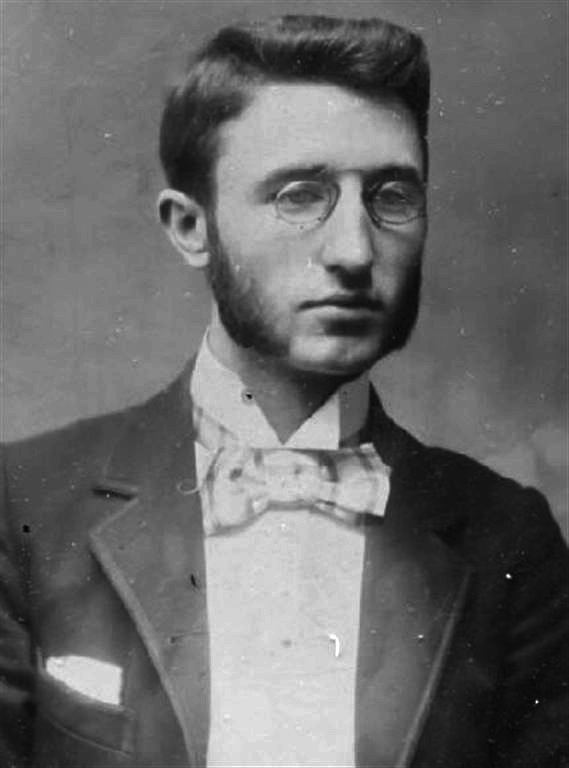
From their beginning, Columbia's management was an interesting mix of non-musical born leaders.  After Columbia got settled in 1889, their first studio manager was a man who looked like this: 

That, is Frank Dorian. 
He was their first studio manager and paymaster, who was a record technician and blunt leader, in the Columbia tradition. He was part of a clan of three brothers who ran different aspects of early Columbia, though he was the Dorian with the highest position for the longest time. His term as manager was a turbulent time, as he was studio manager during their painful transition year of 1896 and very early 1897. He left his position right in the middle of their big transition, as in March 1897, he was officially given the job as the manager of Columbia's new Paris office. With him gone from 27th and Broadway, a new face was elected as studio manager... ... 
One of the Emerson brothers, in this case, Victor Hugo. 

Just like the previous studio manager, Victor was part of a clan of brothers who were involved in different aspects of Columbia. This time, there were four of them: Ralph, Clyde, Victor, and George. Clyde, Victor and George were the ones who took Columbia by storm in the early 1890's with their technical genius. Victor particularly shone as a bright young man to Columbia clan leader Russell Hunting. From there, Vic Emerson rose up the ladder of management at Columbia, until 1897, when he was made their studio manager succeeding Frank Dorian. He quickly became someone that the studio stars did not like. As to those who had worked with him before knew that he was really only good for being a studio engineer and fix-it man. He and Georgie Emerson(as they called his younger brother) took turns being the engineer in the studio and just being present to manage daily recording activity. Emerson was not preferred by the Columbia staff, even if he was praised so highly often in The Phonoscope, they still did not enjoy how he ran that studio. His demanding and illogical commands were impossible for some of the studio workers to fulfill. The way he ran the studio made the artists kick him out of the clan in the first place, as it was doing injustice to many of the staff members. He was the manager of Columbia in the unstable times of the George W. Johnson trial, and was the man who began that immense pit of money for the innocence of Johnson, which did work with all of the great legal people Columbia had at the time. He also witnessed all of Hylands Spencer and Yeager, thought he only watched from a high perch, not really being able to fully understand under-the-table deals going on with Spencer and Hylands. He knew of that venture just as a publishing firm begun by their everyday Rag-Time studio pianist, nothing more.  After the fall of the firm, he had the Climax/Zon-O-phone/Victor affair of the next year to deal with, which almost got everyone at Columbia thrown out of the record business...again. It was amazing that after this feud, Emerson got through all-right, and still remained to manage some recording sessions, still being hated by many of the regulars at Columbia. Around 1905, he disappeared from much of Columbia's activity, even though he was still somewhere close to them, as there were some artists after 1902 who recalled him being in the studio on occasion, throwing around his demanding comments. After that, the classic dynasties of Columbia management ended. As has been explained before, Columbia's management was the reason that they had such an "anything goes" atmosphere in their studio for so many years. Edward Easton was the first of their management to promote this democratic atmosphere, and since he ran the entire thing, this mindset spread to all aspects of Columbia. The volunteering was encouraged, and surprisingly, free enterprise of the studio talent was as well, which is why we see all of these small record businesses begun by the studio stars. None of that was so at Edison. 


I would love to do a section on their ledgers... ... but we know why that won't happen. 


Hope you enjoyed this! 

Saturday, June 25, 2016

Organizing some of this pianist mess(or re-doing a guide to early studio pianists...)

Much of what I have said about all of those earliest studio accompanists on this blog are things that come directly from the recordings, and are based on their backgrounds, and more than half the time, these unfortunate artists are never mentioned in catalogs. It really is like untangling a huge ball of string, that will perhaps never be untangled completely. How frustrating this whole thing is... I cannot best express how much of a headache this entire studio pianist venture has become, and Columbia's lost/destroyed ledgers really don't help at all in this. Sigh...

 I have been advised to try and put together a list of four recordings for each of these pianists' styles, and I ought to think that the easiest and clearest place to start would be proving the studio term of Frank P. Banta. 

This picture came from an obituary of Banta in a newspaper from 1903. 

Banta at Edison's studio piano in 1902. 
The only reason that Banta is easier to pinpoint as a definite studio pianist is because he was mentioned later by many studio stars as an accompanist, and also that he was famous for his transcribed solo of "Violets". It also helps that he was in that picture of the 42 Edison recording stars from 1900:
here's a closeup of Banta:
No. 35 he is. Love that look on his face! 

Now that in itself secures the fact that Banta worked for Edison, seeing him in that picture has higher advantages than a catalog(it helps that he was very distinct-looking in this case...). 
Now as for identifying his style, which is the hard part. 
Banta's musical background has been debated over the last eighty or so years, and even back in the era in which he lived there were conflicting statements, and misleading connotations. One source(one of those who worked with Banta), claimed that he was self-taught and learned from a very young age. Whereas another source stated that he was very well-taught and learned theory, tuning, and sight-reading. One thing is true however from these claims, Banta had perfect pitch, and was able to play anything be ear, as several sources, including Dan Quinn's Walsh letters, stated that he was able to play something right off the spot if someone threw a title at him, as long as he had heard the song before(which, being a studio pianist, he certainly would have).To give Quinn's letters more credibility, he named his youngest son after Banta, and he worked with Banta the most at Edison in 1899-1902, from that, he certainly recalled those times with Banta fondly and full of detail. Banta was mentioned in a handful of catalogs from 1899 to 1903, since he made a few piano solos in that time, one being "Hello Ma Baby", and another being "Violets", though sadly, the latter was much more popular and common. That is very helpful in trying to figure out Banta's recording activity. 

Picking four recordings that illustrate Banta's style are hard to some extent, as he was reported to be on a few labels, and was liked by many recording stars, so he's behind many studio stars. It's not at all biased with Banta, unlike Hylands at some points...
The first one that I have here is 1901 Edison cylinder with Arthur Collins. It's a recording that has caused some buzz in the record collecting community for the Rag-Time piano accompaniment so early on. Here's "Lam Lam Lam" by Arthur Collins. It's a rather early example of Rag-Time, still with all sorts of tricks that were lost as the Rag-Time era went forth. The one trait in this piano accompaniment that really is distinct is that rollicking and rhythmically even improvisations in the right hand, also the choice of chords in the left hand rhythm. There are also some strange rolled octaves that can be heard at about 2:06 that was distinct about many Victors(that Banta also worked for, according to some of their ledgers). The improvisations are very easy to understand and are not out of the rhythm at all, unlike some Columbia's from the same time period. 

The next recording is Silas Leachman's famous recording of Ben Harney's "Mr. Johnson Turn Me Loose" form 1901. This is not only a fantastic early recording of Rag-Time, but it's also one of the best examples of Banta's Rag-Time style. It has pretty much everything that was distinct about those Edison cylinders, the gradual speeding up, improvisations free of mistakes, steady kept time, and the ending chord with the fifth. One item that came along with Banta's Rag-Time was a more "dotted" syncopation, which, if you know anything about music theory, means that it's very slightly syncopated and at times sounds a bit stiff and old-fashioned. It makes sense that this is so according to Banta's obviously trained background, and the fact that he grew up in New York, not anywhere in the midwest or far out in the Western states.  

This next one is an earlier example of Banta's style, which is still comparable to the other two above, even though the style is much more "dotted" and old-fashioned, yet still syncopated to some extent. Here's Billy Golden's 1897 Edison take of "Turkey in the Straw". It's a much more old-fashioned sound, but it's also got Ragged playing in there, which is dotted and stiff much like the playing on the other examples above, also, there are also some hidden and hard-to hear fifths in there, including one at 1:32-33, and also are audible occasionally throughout. Also, the record is ended with that same fifth and chord that the others had. This take is almost identical to Golden's 1903 re-recording of this on Edison as well. 

The last one I have in my immediate reach at the moment is a recording with Will F. Denny on Edison. Here's Denny's "Go 'Way Back and Sit Down" from 1901. This recording is also a great piece of Rag-Time by in many respects, and it has many of those lost traits that were on the recording of "Mister Johnson Turn Me Loose", some of those fifths, and stiffness. Banta was able to play pretty loosely by 1902 and 1903(take the later recording of "Medley of Coon Songs" with Golden for example), but earlier on, was getting used to the Rag-Time feel, though he really did have it in him, as we can hear recordings like these listed here that are great pieces of Rag-Time regardless of the stiffness. The stiffness could not easily be noticed by someone not really listening closely, as it's pretty easy to miss most of the time. 

The fifths paired with "dotted" syncopation are really what distinguish Banta's playing, and they are not just heard on Edison's, as he's in that picture for proof, they are also heard on many Victors from the same time as well. There are other recordings made for Edison and Victor that would be good examples, but these main four are what I will stick with for now. This style would definitely suit Banta for his background, regardless of the fact that he was trained or not, it fits him for the place that he grew up, and that he came into the Rag-Time fad later, he was no pioneer in this matter, even if he worked with Vess Ossman before he was a regular recording artist. 


Now for Fred. Hylands.
Hylands posed with the Columbia orchestra, at the piano in Columbia's "big room" in  mid-1898. 


Hylands in Columbia's exhibition room in August-September 1898. 

Hylands is still a controversial figure with pianist identification, as I still haven't been able to prove myself of my theory that Hylands was at Columbia for longer than just the entirety of 1898.  It's hard to know about Hylands, as the only suspicion that got my interest sparked in him was the amount of times he was mentioned in The Phonoscope, as that's where the two pictures above came from(he's not identified in the first one, but as we can see, it's most certainly the same figure, just one image has him with more stately posture). 

This character's background says everything about his style. He's a fascinating character, which is of much contrast to Banta. He was born in Indiana, and raised in Indiana as well. His first instrument was the fiddle, and he began to play the thing at about the age of 10, learning who knows what when be began. It's likely, considering his location, that he was playing old songs from the Appalachians and even precursors to Rag-Time. By age 12, he was beginning to play piano, and learning how to rather quick, possibly being self-taught in reading music. Not long after he began at the piano, his parents took notice of Fred's and Etta's talent, and decided to have them become performers. They traveled around the Fort Wayne area, and occasionally went into northwestern Ohio. By 1887, Fred was working alongside his father at a grocery store/saloon, as well as playing some music there on occasion. In 1893, he and the family moved out to Chicago for the world's fair, and after the fair, they remained there for a few more years. Almost as soon as Fred got there, he was working in local vaudeville houses, and learning the newest underground fad of the "rag", or in those days called "jig-piano". He learned from the best, watching Ben R. Harney play, black professors who came to the fair, and other well-known pianists in the local saloon communities. By 1896, he was becoming known as a "Rag" pianist by playing syncopated music, as his earliest published piece was from 1896 and it already anticipated the big "rag time" fad soon to come with strange melodic improvisations and syncopated rhythms. in early 1897, he was out in New York performing at various theaters on 14th street, and earning his fame as a music director and and authentic "rag time" professor from Chicago.  it took until the middle of 1897 for local record companies to decide that they needed a new pianist, in this case, especially Columbia.  
Around September 1897, Hylands was beginning to be used as a substitute pianist in their studio, as by the end of 1897, much more often very ragged and "hot" playing can be heard on their records, in a style that is the polar opposite to the pianists there before. 

Picking four recordings with the style described in the section above is a little more complicated than picking some for Banta's style, because there are many more examples of the unique style from late-1897 to as late as 1905. 

The first example is a record by George W. Johnson from early or mid 1898. It has one of the most ragged accompaniments I have ever heard on any brown wax cylinder, and it has some even more strange distinctions adding on to the uniform syncopation. Here's one of Johnson's many takes of "The Laughing Song" from 1898. The playing on this very unique, and it's very much different in feel and syncopation style than the previous style exhibited, and it sounds much more natural and not stiff at all, unlike the last ones. It's got many distinctly characteristics, such as the syncopation pattern throughout the record, and at the very end, also the bass pattern in the solo after the first chorus, which is something I have only heard on Columbia records. The main thing to take away from the style on this is that there is not only heavily syncopated improvisations here, but also the one quick bass thing at 0:59-1:00 or so, that little attribute is very important to this style. 

This next one is a popular take by Billy Golden from 1899, a year after the last one. Here's Billy Golden's 1899 take of "Turkey in the Straw". Now the first thing to be said here is that it's a dramatic contrast to the 1897 take of this by Golden on Edison. The first thing to note is that same syncopation that was on the last one, the same natural "feel", and those bass patterns(and lots of them...). This record most certainly has the same pianist on it as the last one, and they were recorded pretty far away from each other date wise. Another important attribute to this style is the walking broken octaves, which is very strange to hear, but was played often in this style heard on Columbia records from this time. Those walking bass octaves are heard several times on this Golden recording. That ending pattern is also something that is heard only on Columbia's, as it can be heard at the end of this 1903 record here, and the walking bass octaves can be heard at about 1:08 on this 1905 record here. All of these are also in that same style, just configured a little differently, but with the same distinctions. 
This next recording is a fantastic rarity by J. R. Johnson and Bob Cole, who were members of the "Frogs" Club, which included Jim Europe, Bert Williams, and George Walker. This one is actually two takes recorded on the same day in 1902. Here's one of the takes, and then for the other one. There are so many strange things in the piano accompaniment on these records, but most of the same attributes from earlier are present on these takes. One thing that is heard often on both of these takes that I did not mention is the swift trills of thirty-second notes in the intro and in the first verse. This attribute was also part of this style that was on Columbia records, you might have already heard it on the records just above, as every one of these records has it somewhere, such as this Cal Stewart rarity from 1905(it's the fourth thing listed on the page). This Collins record shows off all of the walking bass octaves that could fit in every place, much like this 1899 record here(music begins at 6 minutes...). The mix of "dotted" notes with very syncopated notes is also part of this style as well, and these two Collins takes exhibit it in perfect harmony. 

This final one is actually a Zon-O-phone from early 1903, also by Collins. Here's his Zon-O-phone of "Bill Bailey". This record almost exhibits every thing that was explained in the records above, but it gets one aspect across that very few of these other ones did. This one shows off the "feel" that I mean better than any of these records so far. This record exhibits many Columbia pianist specific traits, especially the syncopation, which is pretty much identical rhythmically to that of this 1898 cylinder here, and also at the solos on this 1901 record here, as well as most of the other records in this section listed. That quick run of right hand octaves beginning at the second chorus at 1:30 is also the same thing as some of the improvisations on this 1902 record here. 


You may have noticed that I did not at all use Hylands' name in any of these examples and explanations. The only reason I did that is to save all of that for this section of the evidence. I now have to tie the style to Hylands in a logistical way. Do all of these attributes match the background that Hylands had?

Yes. 

Why? Well, if you know anything about how the earliest published rags were written, you might have noticed that all of the composers of these tunes came from Chicago for the most part, Kentucky, Ohio, or Indiana. 
Just for full proof of the similarity, here are some examples:
 Max Hoffman's "Rag Medley" of 1897

Ben Harney's "Mister Johnson Turn Me Loose" from 1896

Max Hoffman's "Ragtown Rags" from 1898 

I know this is a lot later, but it's from rural Indiana, and it's in the same style, "The Stop Rag" from 1913.

Theodore Northrup's "Louisiana Rag" from 1896(published in Chicago in 1897)

Robert S. Roberts' "A Bundle of Rags" from 1897(published in Ohio!)
(this one even has the rare added bonus of left hand melodies like from the records!)

Robert S. Roberts' "Pride of Bucktown" from 1897

even really early Rag pieces exhibit this style to a high extent, such as:
Carl Lexhoizt's "The Ebony Funeral" from 1894
and even
F. Neddermeyer's "Opelika Cake Walk" from 1892


All of these published Rags exhibit much of the style that I spoke of above, and with the background Hylands had, that style would almost certainly be his. If you're looking for a published composer of early rags that has a writing style the most similar to Hylands' style, Max Hoffman is one, Ben Harney is another and actually, Robert S. Roberts is the closest to Hylands' style as far as I have come with this. His "Bundle of Rags" is very very accurate to Hylands' style on late-1890's Columbia records. This style of Rags did not last very far into the 20th century sadly, as by 1905-1906(with a few exceptions like "Pickles and Peppers" and others) that very syncopated and playful style began to fade, and didn't last throughout the rest of the Rag-Time era. 


To many scholars I have spoken with, this style of playing(Banta's and especially Hylands') is a much more real representation of Rag-Time, and what it was actually supposed to sound like. You may disagree with me you Joplin lovers, but only Joplin's early works were in this style in any sort of way, but as time went onward, that began to fade away from his compositions. 

I will soon do a post on Edward Issler's style and Gaisberg's as well, but I will have to do more studying of their playing and backgrounds in order for that to happen...


Hope you enjoyed this! 


Friday, June 10, 2016

Record identifications and inconsistency

After speaking with Ryan Wishner briefly last evening, the idea struck us that Columbia's record slips of the late-1890's were inconsistent and very different from each other. Berliner records from their beginning to 1897-98, had all the information about the record etched onto the wax by the performer. Most of the time, those records are very hard to read, depending on the performers who signed it. Usually, Quinn's Berliners were much easier to read than Billy Golden's, and Russell Hunting's were in-between difficulty. By 1897, most Berliners had the selections and numbers etched clearly on there in print, not by the hand of the artists themselves. Though, in 1898 to 1900, many times you can see the well-printed information, but the signature of the artist one either one of the upper corners of the label, such as on this record here. Yes, I know Collins signed the bottom, but most of the time, the signatures were either in the left or right hand corner, next to the title. On Len Spencer's Berliner of "You Don't Stop the World from Goin Round", he signed the upper left corner, as one of my friends reported from owning the record. 

That's Berliner though, all the information is clearly etched or printed on the records there, this isn't like Columbia. Columbia is still a frustrating area for record collectors(not that Berliner isn't), from the absolutely despicable decision made to destroy their ledgers. It makes everyone wonder how they were able to keep track of their heavy recording activity, which sometimes consisted of two or three things going on at one time. This does not count exhibitions however, when they did those, all recording activity upstairs would be suspended until the next morning(so they would send everyone else home!). Of course, with that fact(as described by Frank Dorian), there would have been two or three pianists, like Fred Hylands, Schweinfest, and Issler. That sort of thing is not indicated anywhere however, this is why for decades there was only a handful of collectors who had the thought that George Schweinfest was their regular pianist in the second half of the piano accompaniment era(1897-1905). Most people excluded Issler, because they assumed that once the orchestra split up, he was no longer working there, though logically, they couldn't have dropped him in 1898, because Fred Hylands was working there then. 

Anyway, enough of the pianist thing, I could go on for pages about that, because I'm still trying to undo all of the tangles of misinformation that previous record collectors and historians left behind. Of course, if Columbia's ledgers were still in existence, we would all be able to know more about everyone who worked there in the prime of their recording (before 1910), we would also know how they were able to keep track of everything. I have always had the feeling that they not only had certain management workers keep track of things, but they probably also had some of the artists volunteer to write things down and keep track of recording done on certain days. Since a lot of Columbia's functions were done from artists volunteering, it wouldn't be too much of a surprise if Master Easton and Vic Emerson had them do that as well. 

I have been told by the one collector friend of mine who has had the chance to read through Len Spencer's notebook that Spencer wrote down recording dates, songs he recorded, and songs to learn and later record. That is exactly what I mean here! That seemingly small thing is actually a piece of Columbia's ledgers! So, if Spencer did that, others probably did too,  one other person who most likely did that would be Issler, or George Schweinfest. I want to think that Hylands would do that, but he probably wouldn't. Once I go out to see that notebook, I will make sure to make notes about what sort of information is present there.  

There is not a way to know how organised Columbia's ledgers were, though one way to get some hints is their inconsistency with record slips. 
Here are a few:
these came from a page of the Dan Quinn CD put out by Archeophone. 
the third one on the far right is for a Phonetic record, the other two are Columbia's. 
Yep, none of the Columbia's look the same at all. 
I have always found that weird. 
Why are they all different? Edison record slips pretty much all looked the same, after about 1897 that is. Maybe Edison was just more organised? I don't know. Not sure what the different slips mean, but it says something about how they ran things there. I still don't know if that little thing written in ink on the slip just above is "LS" or "H". If that's an "LS", then that would be Columbia's take on the Berliner label of the time, with the title, number, singer, and the singer's signature(kind of in this case...). The names "M. T. Poland" and "Chas. Carson" on the slips in the picture a little farther above indicate the recording engineer, which, strangely enough, is not indicated in the "LS" slip. The full title of the song is also not indicated either, as it isn't in one of the other slips in the other picture. 
I like that they put simply this for two of the slips:

"Cake Walk" rather than "The Grand Coonville Cake Walk"
and 
"Wabash" rather than "On the Banks of the Wabash"

They must have not needed all of those extra words, also to save time, which also gives the impression that they had harder to understand ledgers, that were organised, but in a strange way, that is in some places incomplete. Of course, if more of those record slips are out there, then one of them might be a lucky one where the pianist is identified, which, as I have seen from more obscure labels, did happen sometimes. In the earlier days of the piano accompaniment era, there were listings that had the pianist identified, such as in early Edison and North American pages. You can see an example of these on this video here. Of course, North American records didn't have record slips, because they had the channel rim for the paper label. Most of the paper labels are gone, as it is very rare to find one with the original one still in tact. 
Here's that channel rim I mean:
This one unfortunately has lost the paper label as means of identification. Like many records, this is one that you just have to listen to find out what it be! 

Anyhow, back to Columbia's strange record slips. Just for a good comparison, here's an Edison one from about 1898:
It makes sense, and is very clearly stated what is one the record. No signatures and stamps included. The signatures not being there is a not much of a loss, but the fact that it can be clearly read and understood makes me wonder about Columbia. As we all dig into Columbia Vs. Edison debates, we learn more about how strangely different these two companies were. The volunteering basis at Columbia is something that Edison never did, as Edison's primary staff weren't a group of friends who went out together after recording days. The two staffs stayed together as expected, but one was more friendly and cordial to new people than the other. They were in the right places though, as the pianists they had, couldn't have done well at the other company, though Banta would have fit in well at Columbia, he just wouldn't have approved of the habitual gambling and drinking as much. 

Since I'm on the subject of Columbia's records, I glanced through the record list of their records once again, and I ran across some titles I hadn't seen before. I forgot about the "Vaudeville specialties" section at the 30400 mark numbering system. Unfortunately, there were only ten of these, but each one of them is fascinating. 
Here's the list:
All of these look fantastic. 
The only one I have heard is the second one listed, Spencer's "Musical Moke". From what I have observed in the ways of Columbia records, there were a few of those sort of "Actor imitations" records scattered throughout their catalog from 1898 to 1903. Wonder who's on no. 30404... There's a strong possibility that Harry Spencer is on that one, since he's on the 1903 take of the second "actor imitations" record Columbia issued. The "Stuttering Specialty" record is probably similar to Len Spencer's "The Stuttering Monologist". 

The one record that really has me anxious to look for it is 30407. 

Comic Dialogue Between Comedian and Musical Director

That sounds better than fantastic. This not only sounds great for what it describes, but also by who's probably involved. Len Spencer is probably the comedian, and of all the people that the musical director could be, it's possibly Fred Hylands. Well, he was the one musical director who worked at Columbia, so he would have known what the sketch could be, and how to make it most realistic. If it really is Hylands speaking in that sketch, someone needs to find it!! 

**If anyone knows if there's a copy of Columbia 30407 out there, please write a comment on this post!**

Hope you enjoyed this! 


Wednesday, February 17, 2016

A record slip and other surviving relics of Columbia

Now I have explained the fact that Columbia's ledgers were destroyed in the 1970's, by whatever means were used to rid of all of this precious history. There are some small means of knowing some record information about Columbia records prior to 1901, but it's a terribly complex venture to follow. There aren't complete catalogs existing from 1890's Columbia out there, with recording dates, personnel information, and everything else we need to know other than record numbers and the label, but there are small sections out there that I have seen within the past few years. One of these little things is this here:
with a little section of it here:
These both came from an edition of The Rag-Time Ephemeralist.
I didn't have the chance to actually hold the thing in my hands(unlike an actual Berliner catalog from 1898!), but it would have been a real interesting experience to do so. As something like this is actually the best example of what exists of Columbia's 1890's ledgers. They aren't very specific, with not all the information we really want, but there's enough here to where much of the information could easily be interpreted or assumed safely. The singer isn't listed here in the two examples above, but it very clearly those of Len Spencer, by the numbering system(Spencer's Columbia's number from 7200 to just over 7500 by the way). That's usually a good indication of who's records are who's, as at Columbia, most regular artists were assigned a specific numbering system, after 1895 that is. Before 1895, they didn't really have that, even though they had hints of it sometimes(many of these early titles with old numbers re-recorded with different numbers, which were later recorded again with that second number they were given), it's a little confusing, but once you see lots of Columbia's, one can start to memorize which numbers go with who. Speaking of that, my good friend Tom Hawthorn has a book that is an actual guide to the numberings of Columbia's in the 1890's, and each artist was listed!(couldn't find Fred Hylands listed in the index though, shame on them). 

The record slips I have with my brown wax Columbia's are not originals though, as the originals from old Columbia are sometimes a little hard to read. For those of you who collect early disc records, you might know of the American Record company, one of their records can be seen here:
(from my own collection)
Other than the brilliant blue coloured shellac, and the beautifully styled label, the thing about these records that can be a problem is being able to read the title and performer on the label. This example seen above is a better example, but since the title was stamped on there, the ink can be very faded on many examples of these records. Obviously, the one above has fared better with the ailments of time, all the information is clearly able to be read. Now to connect this back to the Columbia subject, the readability of the label on these "blue Americans" as they are called(though I have a friend who owns a black one of these records...) can be compared to those record slips that came with Columbia cylinders, which were stamped onto the sheets of paper, and that was it.  Here is an example of this my good friend Ryan found on Ebay within this past week:
Yes, see what I mean, it's very hard to read. Here's what it says:

Cake Walk
no. 7272
Len Spencer

Now the thing that I am puzzled by here is that little symbol that is the easiest thing to read on this slip. What is that exactly? I saw this slip and didn't really know what that little symbol of some sort was. Now it was written in ink pen, and that has to be a clue of some sort. Now is it "LS" or just an "H"? If it's an "LS", we all know why it's there(Len Spencer is the singer), if it's an "H", that would indicate an extremely rare (and early!) identification of the pianist. The "H" would stand for Hylands, as in Fred Hylands:
Yes indeed. 
I asked my father what he thought that symbol thingy was, and he saw "LS" there, which I do see as well, but I did think I saw an "H" there when I first looked at the slip. It would be better if there was an "FH" written slanted leftward somewhere on the slip, and that would be purely concrete evidence of Hylands being a Columbia pianist(even though I think this fact has been fully established). Evidence other than that in The Phonoscope. 

Oh, I don't know, I can't seem to find Hylands isn't listed in any of my catalogs, it would have to be Frank P.Banta or Christopher Henry Hudson Booth.

Heh! That's what the old collectors say. Even if the evidence is right in front of them( i.e. the thing JUST ABOVE IT, written in JULY 1898). It's frustrating sometimes, talking with record collectors and enthusiasts who have been so accustomed to not knowing the pianist at all or thinking it's Banta or C.H.H. Booth, and trying to introduce(or argue) that Fred Hylands was the pianist on all of those great Columbia's and even some Zon-O-Phones and Leeds records.  It's hard to argue with a record collector who's ignorant to the fact that there would have to have been more than two pianists in the business in order for all the records to me made. 
There actually were three for each record company I think. One who was primary, a sub, and an operatic/classical pianist. Three for Edison, three for Columbia, and three for Victor. 

Anyhow, back to record slips.  I have seen other Columbia record slips before, and they all seem to be different somewhat. It seems that Columbia didn't really have a straight format to their record slips, unlike Edison's, which all look the same. The thing about Edison record slips is that they actually had the title and type of performer printed onto the sheet of paper, so their slips are much easier to read compared to the Columbia ones. I have seen a slip for a Dan Quinn brown wax where the "................Accompaniment" section is left sadly blank, with no name of the pianist listed. I'm sure if Hylands knew he was completely forgotten by all those who collect the many thousands of records he's on, he'd be really frustrated about it. He wanted to be known, and in the time he made these records, he certainly was. 

Now to share some new old sounds! I was just on that great website this evening called tinfoil.com, a website that I would highly recommend to all record and Rag-Time geeks. Now they have a "cylinder of the month" thing that they do, which is really fun, especially when they have a brown wax as the cylinder of the month! This month's cylinder is a great and fascinating one from earlier-1899 by the crew at Hylands Spencer and Yeager! 

Ha! Not really, it's just a joke because pretty much all of them are here, and it was recorded in the timeframe that the firm was existent. The personnel on this record consists of Len Spencer, Steve Porter, Roger Harding, Dan Quinn, Fred Hylands and the Columbia orchestra. 
Did you hear it? The talking at the very end?
It's not impossible to hear either, as many times when this comes up, it's hard to hear by a person with average hearing. My hearing is very pristine, and I can hear many things that most people can't, even those my age can't! 
Now another thing about this cylinder that's so fascinating is that Hylands(who is VERY loud on the piano) slows down quite a lot in the song at the end. He's already behind the orchestra a little bit in the overture, but then he's all slow on the end song. He's a little out-of-sync throughout the songs, just a little bit. 

 Notice! that terrible laugh after Spencer says "he's no better!" at 1:36 just before the end song. Who's that with the horrid laugh? Psst! It' probably Fred Hylands... 
Listen to the second voice at the beginning of this cylinder just after the announcement, here.(there's that terrible laugh at 1:31!)That haunting voice that's hard to understand, that's Fred Hylands alright. 


I hope you enjoyed this!