Showing posts with label Ben R. Harney. Show all posts

Friday, March 17, 2017

Pianist progressiveness and background analysis


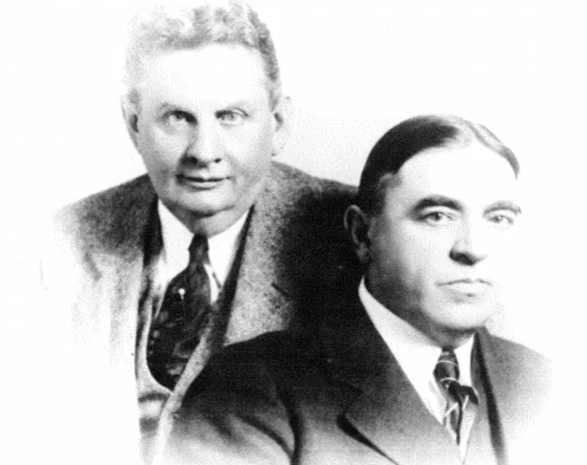
We recognize all of these funny faces. 
These are the primary studio pianists of the brown wax era. from Ed Issler to Chris Booth, they ruled the piano accompaniment on all of those recordings from 1889 to 1905. It has been well-established over the years that Edward Issler was the first studio pianist, which he certainly was, and he just happened to set the best example for what a studio pianist should be. Issler's perfect nature as a studio pianist can make him out to be the most historically interesting of the early studio pianists. He linked the old ideology of Victorian music with the new syncopated music of the 1890's. Despite Issler's age, he was able to illustrate that he not only had a perfect sense of time, but also that he understood the melodic and rhythmic structure of syncopation, better than Fred Gaisberg ever played on records(and Gaisberg was almost twenty years younger than Issler!). Issler was more progressive for his age than some of his succeeding pianists who were nearly twenty years younger than he. Issler could have(if he worked toward it) played syncopation as smoothly as Banta did, and Banta was self-taught in this style, unlike Issler who had to sit down and really figure out how to play syncopation. 

Oddly enough, Charlie Judkins threw me a fantastic idea that I had never truly considered about these pianists. He stated that the most "modern" of these pianists overall(not including Issler as an anomaly for his age), would have to be Banta and Hager. No mention of Hylands at this. Banta had a style that was very 1896-97, and Hager was similar, though he sometimes played a little more like 1898 and 1899 published pieces. Where's Hylands in all of this? Well, if you really get right down to it, Hylands played an older style overall than the others, in some ways, seeming more archaic than Issler's, which is really strange. Really think about it, Hylands was considered up-to-date in 1896-1901 or so(that's the second half of the brown wax era!), but sounded like and older pianist after 1901, the way to really learn this is to listen to a bunch of records with Hylands playing from the early Columbia disc era(1901-1905). 
Here are a few gems:
"By the Sycamore Tree" with Bob Roberts, 1903

"The Ghost that Never Walked" with Bob Roberts, 1904

"My Castle on the Nile" with Arthur Collins, 1902

"Everybody Works but Father" with Lew Dockstader, 1905

"Uncle Quit Work Too" with Lew Dockstader, 1905

All of these are prime examples of why Hylands would have been considered an outdated pianist, even by as early as 1904. That seems strange, but his style was really that of a folk pianist in the late-1880's and early 1890's. The one tradition that Hylands kept longer than Issler, and it's more obvious that he did, was the banjo imitation style. This not only kept him from seeming modern and progressive, but also kept him from moving forward to the extent that some of the other pianists did. 
Think of it this way, even as late as 1909, Hylands was being noted in papers as "[rendering] a correct imitation of the banjo" as an opening to a show at the Majestic(the name of the theater he managed since 1905 I believe). This little blurb can seem as though Hylands was behind the times, despite his management at many major theaters(which should yield a fully up-to-date mindset musically). Any Rag-Time scholar would know that the idea of banjo imitations was a 19th-century notion, regardless of what the papers say. As early as 1909, Hylands was being considered archaic musically, though his demeanor would likely have indicated otherwise. Hylands would have been 37 in 1909, still rather young for a composer and pianist, though the roots and tendencies of his playing could be similar to that of Ben Harney's from around the same time(though Harney did progressive dancing acts at this time, so he was not completely out of style yet). 
 So in summary, Hylands' playing was based on the ideals of mid-19th century folk music, played on the banjo and fiddle(both of which he probably played before he got to piano). This can be compared to Banta's, that wasn't clearly based on folk music, but was to a certain extent. The fact that Banta got started playing piano completely on his own, and likely had strange tendencies when playing(that instructors probably attempted to beat out of him), since that's what happens when you're self-taught to any degree, is what connects his style to Hylands. Just like Banta, Hylands probably picked up strange and unconventional musical and technical tendencies, and when being formally trained probably had the crap beat out of them because the instructor would not accept such weird anomalies in playing. Of course, the beatings would have done nothing for them, and they likely still played these strange things when their styles developed. We can see that Hylands kept much of these tendencies, since his playing overall was strange, and his first published pieces are odd in general, when compared to others from the same time. 

So with all of that about Hylands, his formal musical training probably went similar to what is stated above. Here's a summary: he was trained for a couple of years(not that many in this case) got all sorts of lectures and beatings for his incorrect tendencies, eventually getting to a point where he was exhausted of it, and simply quit. Probably looked something like this:
Consider his nature in dealing with commitments later, it wouldn't be too surprising if the same pattern was so with his musical training. Though in this time, he probably learned the basics of music theory and such, and after quitting the training, he took what he learned and ran with it. Certainly he was musically intelligent, in theory and in his ear(though his style indicates his ear and natural feel dominated his overall musicality). It's likely that his sister Etta received similar training, though, being a little girl(except for the fact that she was also stubborn), probably retained more of what the instructor taught and emphasized. Just as a side-note, it seems Etta was more complete as a person than Fred, though the both of them were as much of a pain to everyone else equally, recall that Etta couldn't settle her marital problems, therefore marrying several times. 

Banta was probably trained in a similar way, though he wouldn't have quit half-way through, since he seems the type who wouldn't disappoint his parents. Also, just a side-note on Banta's parents, his father was 45 years old when Frank was born, which if you know anything about that time period, that's very late in life for a son to be born. Frank was the middle child with his oldest sibling being born in 1868. It's just unusual for a parent to be over 40 when their child is born in this line of study, and in general when looking into the Victorian era. Frank's father likely allowed his son to enter in music, but certainly wouldn't want it to be his sole livelihood. 
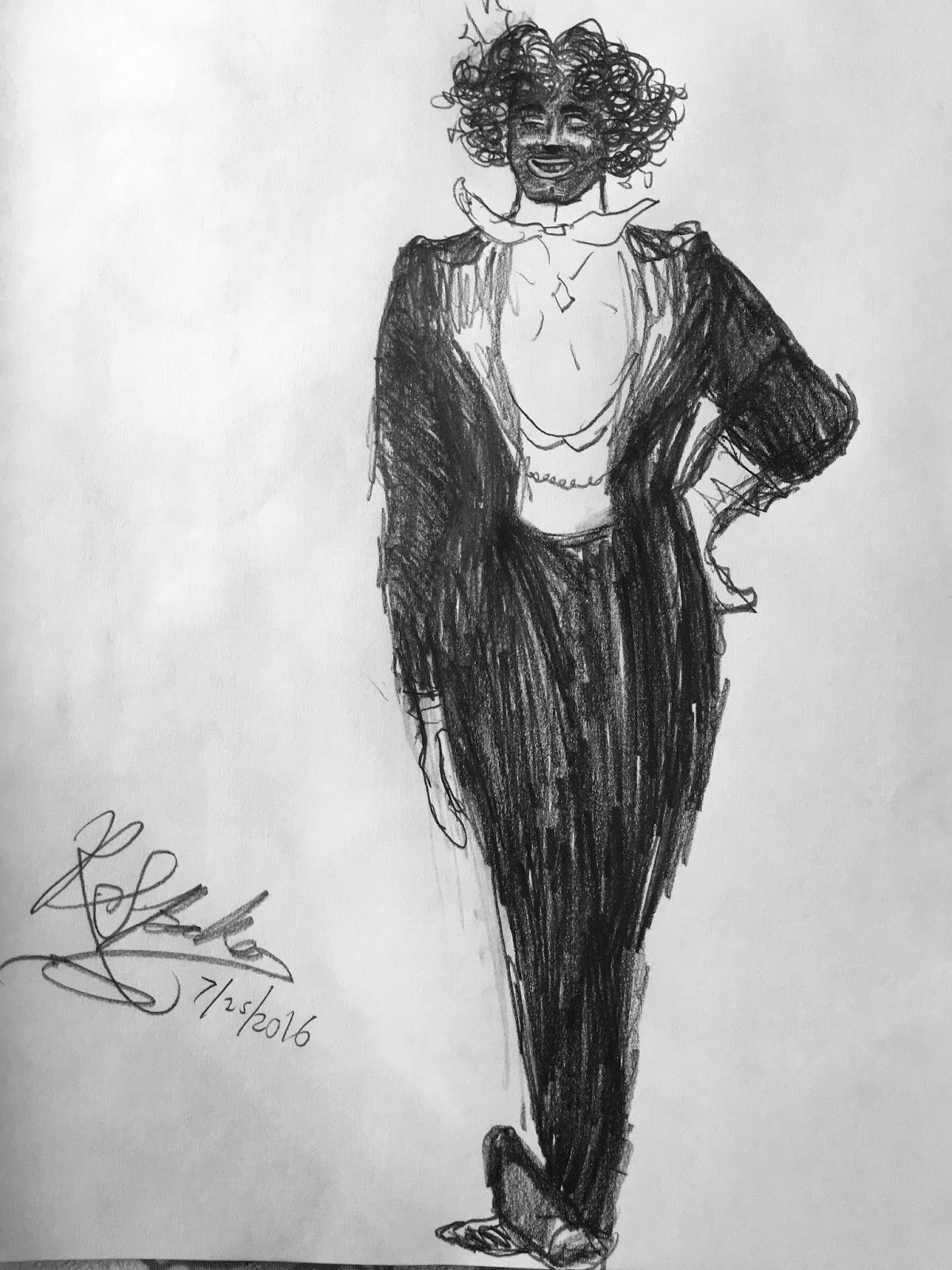
I must have looked a little something like this:
(a cartoon I did illustrating Banta's musical upbringing)

 Eventually Frank's parents got him musical training, but it must have taken a few years before this happened. It's likely that Frank already had developed musical habits and characteristics by the time his formal training began, since as stated earlier appertaining to Hylands, Banta had characteristics that could really only have been developed from being self-taught even just a little.

 Now we know about those two pianists, since so much research has been done on them(well one of them anyway, the other has only been my digging and a few friends as well), but what about Issler and Hager? We know how strangely interesting Issler's playing was, since he is often considered the best overall musician of the early studio pianists. This is without a doubt true, his rhythm was unequalled, and his improvisation skills were especially well-established for a pianist trained in the 1860's-70's. Just to put this into perspective, let's say Issler began his musical training at age 7, well that would have been in 1863. That's two years before the end of the civil war, and he would have been old enough to have begun musical training, which would officially place him as beginning at the end of the first syncopated music era(1830's-about 1869). Who knows that he could have heard in that time from 1863-1876, since that was so early on, and such a mixed stew of music time wise. He also would have likely became a music teacher around the mid-1870's, which is(what some scholars say) likely where he was first exposed to black music, or clearly syncopated music. While a young struggling music teacher and musician, the need to understand syncopation likely came his way. He took this knowledge with him when he began his parlor orchestra around 1885, and it seemed that his piccolo and flute player also had a similar mindset when it came to playing syncopation. Their similar mindsets when it came to music in general is why they were so trusting enough of each other to record piano duets. Recall that Issler and Schweinfest were the first commercially recorded pianists in history(yes there were piano solos recorded before 1889, but they were not commercially recorded to be sold). We still have yet to know if any of these dozen or so recordings exist, and as always, there's a possibility(there's more of a possibility of these existing than those supposed Buddy Bolden cylinders). 

The most progressive of these pianists overall(chronologically) would be Hager:
Still the most handsome of the early recording stars. 
Hager was not only progressive and strange musically, but also in his mindset it seems. He appeared to have been open-minded, and not obviously prejudiced in racial terms. He had much of the liberal side that Russell Hunting had, minus the indecent humor and possible bisexuality. Hager was much more decent, and reserved it seems, though is playing is the strangest of all the early studio pianists. Hager was born in Pennsylvania, not an expected place when examining his style. His style combined the tendencies of Arthur Pryor's Missouri-Indiana style, and that of the showy style of Mike Bernard and Banta. Hager played with lots of octaves, which was characteristic of a Texas Rag style, lots of fifths, similar to the Missouri-Kansas Rag style, and jolty syncopation, which was similar to Mike Bernard and Banta from New York. Something about Hager's playing made him the most creative and technically brilliant of these pianists, and it doesn't help that his background can back this up. He was a youth violin virtuoso, given all sorts of awards like Ossman was for banjo, and these awards eventually got him into music school. He studied at the school that Dvorak helped to found in New York in 1892-ish. 

Now consider this, Dvorak was Czech, and had never come to America before 1892. When he wrote his New World Symphony in that year, he pieced together the music of the Americas, and what he wrote for the American south was a syncopated banjo imitation. He had no preconceptions of North American music, and did he write for it, syncopated folk music! This was Dvorak's mindset, he knew little about American music, and with the little exposure he got in a relatively short period of time, he took in that syncopation was popular, IN 1893. His foundations were African and Native American music. With that, it is likely that young virtuoso Hager at 19-20 was taught under these principles. 

THAT, is my explanation of Hager's musical mindset. 

Though that only explains the foundation of Hager's music and style, everything else sort of grew on him in the years that came along, from 1895-1902, since his style did vary sometimes, even from year to year somewhat. His playing in 1898 sounds rather different from how it did in 1903, though we know it's the same pianist from the basic foundations of the playin being the same. 
Such as these three recordings with Hager on piano(all Zon-O-Phones of course):

from 1900(also for St. Patrick's day!)

from 1901

1902

and 1903.

There are certainly similarities and differences from year to year, but it's certainly the same strange pianist. 
Now compare Hager's playing to two records with Banta:
From 1900 on Berliner.

and 1901 on Edison.
They are very different, but have the same sort of progressive and ragged nature that didn't seem archaic like Hylands' playing did. Hylands' playing was much more folksy(though that Berliner has some real rough sounding playing in there!), and sloppy, as Charlie Judkins calls it, which is very true. Banta is loose at some points, but clung to a slight stiffness always. Hager was stiff for the most part(much like Banta), and it didn't help that he was almost constantly playing octaves, even when improvising. With all of this, we have a place to start when thinking over all of these fascinating pianists. Knowing all of this is very important to knowing record companies, dating records, and kinds of sorting that goes into these early records. 


Hope you enjoyed this! 

By the way! If you want to see more of my cartoons, check out my Deviant art page. Here's a link: http://ramonasidneybaker.deviantart.com/ enjoy the esoteric humor! 


Wednesday, January 25, 2017

Revised: Character Studies--Fred Hylands(1872-1913)

After learning a whole lot more about Hylands, it seems fit to essentially re-post the Character Studies post on him. Just like anything I post on Hylands, it's often to aid the kind descendants of him, and to make sure that all collectors are aware of his presence on early Columbia records. 

The amount of information that has been collected on Hylands since this time last year has been phenomenal, and it all makes his life not only more interesting, but a whole lot more complicated. Just a few small facts and observations made by Charlie Judkins and I changed much of what we thought of Hylands, and came as a surprise. If I ever get the chance to give my seminar on Hylands once more(which I hope to!), it will be even more complete than when I gave it for the first time last November! Yes, there are still gaps that perhaps we will never fill, but those gaps at least have been filled to some extent in the last few months. Well, we've still got a long way to tread with the whole Hylands thing, but that is exactly why it remains ever interesting to search.
 There's not a way I could have expected that that unknown, obscure name "Frederic Hylands" written in the pages of The Phonoscope would become such a monumental and long-term project. But no matter, it's still a joy to dig, and eventually I'll find that unmarked grave in New York and at last get it marked if needed. 


Hylands in 1897,


and in 1898.

Here we go...

Hylands was a beaming star amid Columbia's night sky of glowing white stars, with a personality and figure that always consumed a room he entered. Sometimes this was intentional, other times not, but more often than not it was wanted by him. This desire, or demand, for attention is rooted in his past, like most things are with people. Being the older child, and a boy, it seemed inevitable for him to be treated better of the two children, the other being his sister Etta. He was born at about the last week of February(remember that we're not really certain of this just yet), and that would make him older than most of the early Rag-Time pianists, including Ben Harney oddly enough. It didn't take long for his parents, Charles and Mary, to take to the talent and genius of their son, as well as to realize that Fred was not going to be a respectable locomotive engineer like his father. By age 7, Fred was beginning to show interest in playing the fiddle, and with that curiosity took a liking to the banjo on the sly, since that wasn't exactly the most classical of instruments for earning a living. After messing with the fiddle, and becoming rather proficient with it, he began at the piano, playing whatever it was he played early on. Soon he was traveling all around Indiana and Ohio as a child prodigy, hence his sense of importance and need for attention later on. By 1886 and 1887, he was a local celebrity around Fort Wayne, being mentioned in the papers pretty much almost every week, with some new antics and gossip. In 1887 was not only when his father opened a grocery/saloon, but it was also when he went to the local business college(at 15 mind you!). He got into all sorts of trouble in and around Fort Wayne, from cable car bouts to driving a wagon and almost getting killed by a suddenly terrified horse(much like the whole Spencer cable car incident). All of this built his character, and providing entertainment at his father's saloon did so as well. He continued this interesting and well-known life until 1893 when the family moved out to Chicago, in overwhelming interest in the World's Fair. Unfortunately, Mary Whitney Hylands died not long after the move, leaving Charles with Fred and Etta. Etta married off the month after her mother died, with Fred and Charles the only ones at home then. Fred as working out a local outposts for Keith's and Pastor's theaters, playing accompaniments, and managing shows there, but also playing at less-then respectable places that Chicago was infamously ridden with. Places where syphilis and violence ruled the essence. This is where the final touches were set on his playing style, as by this time he had fully settled with playing the piano. His style was finalized when out in Chicago, as all of these other famous "rag" pianists were playing at the same clubs and venues as he, and without a doubt he took from them, despite already possessing a style that was the zenith of Rag-Time's early days(like Ben Harney's). In September 1895, he conveniently married British singer/actress Maria Stevens, possibly due to pressure set on them by both of their parents. Not long afterward, Charles, Fred and Marie moved out to Milwaukee for a short period, most likely because Fred had been asked to work for one of the theater chains at which he was employed to manage. By mid-1896, Fred and crew were finally out in New York. Fred immediately resumed working at the theaters he was already empolyed, only this time it was where the original managers and theaters were, not the chains. Fred earned a reputation in New York, though at first he was seen as a hapless Indiana rube of a sort(not entirely...) to the society Rag pianists such as Max Hoffmann and Burt Green. He was no rube, in fact his smarts were far higher than most thought at the beginning, but this didn't always prove him well. By very early 1897(or late-1896...), he caught wind of the advertisements of recruitment the newly local Columbia Phonograph Company, and that they were holding auditions and tests. Not long afterward, he went off to 27th and Broadway to await his turn before Easton, Emerson, and Issler. Soon he was declared an employee of Columbia, on staff, almost full time. This came about around March-April 1897, according to auditory study of Columbia recordings made around this time. Soon Hylands began to realize why Issler had become bitter about working in Columbia's studio, or any studio for that matter, though at least in the beginning of Fred's term there, and the end of Issler's, the two of them got along rather well, but this did not last into the next year. Of course, with this new job, Fred had no idea how this was going to impact him, assuming it wasn't a horrible occupation to be a studio musician. How he was wrong. In mid-1897 or so, Hylands seemed like anyone else who worked at Columbia, young, sweet-faced, well-rested, and fit. As can be observed from the images of him at the top of this post, none of these things remained as such. He was still relatively good-looking into 1898, though the temptation of the benefits he received from working at Columbia for got to him faster than anyone could have expected. He came in to Columbia in early-ish 1897 at just over 200(keep in mind that he was freakishly tall), and by the middle of the next year, was at over 300. That was unexpected. Also, he seemed to have aged ever so slightly in that timeframe, seeming like heaps alcohol and drugs carved lines and exacerbated his quick gaining of weight. Like many of us would think to-day, that couldn't have been good for him, gaining that much weight in a relatively short period of time. Well, it's likely that in the early half of his time at Columbia(which incidentally was the last quarter of the brown wax era), is where the diabetes he had began to slowly suffocate him, little by little each coming year. It was because of this unexpected spell of suffering and stress that we get quotes from him like this one: 

That was still not too long after he began working for them, a little over a year perhaps. Of course, by the middle of 1898, his rag-time piano accompaniments were becoming a signature for Columbia's records, as they were openly advertised and described in editions of The Phonoscope and they soon became an indicator for what Columbia's records sounded like. His accompaniments in Rag-time behind those singers were superior, perhaps outdoing Edison's own Frank Banta and Fred Hager  by a mile or more. Not always, but the musical ideas and folk background of his made the style more distinct, and interesting to listeners of the era and of to-day. Since Fred was had become so popular at Columbia, he used this to his advantage in selling his music, since anything he wrote while there was certain to get him some decent mileage. it was just at the height of the infamous exhibition season that he wrote his famous "national success"(not really) "The Darkey Volunteer", for Vess Ossman, and when he sent out advertisements highly praising his piece from his first few months at Columbia "The Narcissus Gavotte". This got far, with a handful of takes of "The Darkey Volunteer", and many encores of his fantastic playing at the wearisome, hot and sticky exhibitions, it seemed all-right for him. It must be noted that on the the 1898 cylinder of this by Ossman and Hylands, that it seems the composer didn't even bother to practice his most prized piece, or just bother to play it to the best of his ability(there are many mistakes scattered all around throughout the piece, not on Ossman's part). That just goes to show how Hylands felt sometimes, even in the presence of tightly strung and intense natured Ossman, who probably tediously practiced the piece till he couldn't anymore.  Hylands could clearly be frustrating sometimes, and this is just one example of perhaps many aggravating little things he pulled with other recording stars. 
1899 turned out to be an even more pivotal year for Hylands, and this was because of his forceful will in beginning an official publishing firm with Roger Harding and Steve Porter. He threw the idea at them as well as setting aside some stocks for the firm, all before the firm could ever get anywhere, only publishing one piece successfully in February. After Fred's angry break down from the "Knickerbockers" firm blowing to bits, he stepped right in again to begin another publishing firm, this time with his good studio friend Len Spencer and his booking agent.
This time it seemed Fred had the Columbia Lady's hair in his grasp, by then owning an amount of authority over Columbia's flow of music in the studio. This allowed him to publish music of the studio stars, to further their fame, and this time just not on recordings, but also in print! It was ingenious, until the notion fell through after a year and a half, since Burt Green couldn't manage his flat during the days, and Len Spencer had pretty much dropped out by then, due to his constant recording activity, and Fred himself had grown heavier and weary of the managing he'd done for everyone. Hylands Spencer and Yeager fell through completely in October 1900, and by the month afterward, he had sold all his stock, further throwing him into deeper melancholy from the failure. He still had Columbia to keep him employed, though it was around the time of ending the firm and the last true year of the brown wax era(1901) that he began to form his somewhat rebellious, Socialist viewpoint that later proved him well for a short while. He continued to work regularly at Columbia, thought reluctantly, and worried he was more susceptible to fights and abuse from the other staff members, due to his fooling with them during the publishing firm, which unfortunately for him included everyone he worked with regularly. To escape this, and return to his roots, he began performing in minor shows on and just off Broadway, as well as performing in straight vaudeville, singing songs and playing that signature piano style he seemed to have been known for. By 1902, he had a fling with Columbia finally, almost getting him thrown out, other than the whole Climax feud doing just the same thing. This time, it was more of his own fault, feeling agitated and abused by Columbia's treatment of him, he had enough, though they didn't, and couldn't fire him right then and there. His protest included going off and working for Columbia enemies, such as Zon-O-Phone and Leeds. The other companies welcomed him with open arms, with no previous notion of how vexing working with him was. Of course, like anything he involved himself in, his association with these other companies didn't last long, and by early 1903, he was back at Columbia, working there until the middle of 1905,when at last he was dropped. After 8 years, he was finally freed from them, and able to do what he wanted. Despite mild successes on Broadway in 1905 and 1906, he still was dissatisfied with the little recognition he received from this, and not being able to lived as comfortably as he wanted. Being one of the founding leaders of the White Rats Actors' Union, he had some protection and leverage to keep him and Marie out of poverty. He slowly drifted away from what he was supposed to be doing as a chief at the White Rats, becoming solely a musician with each coming month, refusing to be seen on the stage(Wish we knew why this is...) and becoming disloyal to the union he helped found and organize. He did continue to perform onstage regularly during his period where the other union members became suspicious of him. By 1910, he was living in a boardinghouse not too far away from where the old Columbia building was still standing tall. He and Marie came in and out of the boardinghouse, going on various tours and trips for the stage, and it seemed that Marie was busier than Fred, not even being present for the 1910 census, and her performances scattered all over stage magazines with Belle Farmer were taking over Fred's spotlight by a mile. In 1912, after being thrown out of the White Rats for good, Fred teamed with Wilbur Held as a duo in vaudeville. Keep in mind that by this time, Fred was slimmed out once more, similar to when he first began working at Columbia, but this time it was because of traveling and sickness, not like before. The touring he did from 1906 to 1909 wore him out, and probably exacerbated the downfall of his health. By 1912, especially early 1913, he was especially not well, perhaps any night of a show could be his last by then. Of course, he didn't think that way, so he refused to let this notion bother him. In the early part of 1913, Fred and Held were signed to tour in England in the summer, which by June, is where they sent off to. Once over there, they got to touring almost right away, with Fred and Wilbur being the headliners of many shows, and Marie being in some of them as well. After about a few weeks of touring, once the troupe had gotten to the northwestern coast of England, Fred dropped dead, of something related to the crippling diabetes he had for years. Oddly enough, Marie and Held continued to perform for a few more weeks after Fred died, since their contract had been extended, to two years it's said, but of course, it could not be fulfilled without Fred. 


After a few more weeks, the troupe finally disbanded and went back to the U. S., to have Fred's funeral. It was held by the White Rats union, despite their bitterness toward him in the end, he was still a founding member, and deserved the respect. It is not certain where in New York he was buried, or if his grave it marked in any way, it's unlikely to be. Marie spent two years in mourning for Fred, in the typical Victorian tradition, but just then and there in 1915 she went back to where she and Fred met in Chicago to marry a Dutchman named Sam Gelder, it is uncertain how long they were married, but it was into the 1920's. 


I don't think I need to exhibit a bunch of recordings Hylands was on because they are scattered all over the posts of this blog, and there's really no way to decide on only three or four with him. This is exactly why he's ever interesting! 

Sorry about not posting for over a week, it's been hard to make the time for a post in the past week. 

Keep your spirits up out there! 

Hope you enjoyed this! 

Thursday, December 8, 2016

Analyzing some fun records

While digging for recordings for the last post, I found some fantastic transfers on the way, which is usually what happens when doing that. Just before I finished the last post, I came across a fantastic and wild recording by these two:
Yes indeed. 
Their records are highly valued by record collectors, since in some ways, their harmony was better than Collins with Harlan, and they made fewer records. Of course, there isn't the same charm that Collins and Harlan had, but with Hylands behind either duo, the studio was always a hot time! 
The first record that really caught my attention was a curious 1902 Lambert of "McManus and the Parrot", and it was pretty wild to start! 
My god! Natus is a riot as a parrot! 
Wow, that was unexpected... 
Natus wasn't too often a hilarious and wild character, but sometimes it comes out, like it does when he's the parrot at the beginning of the cylinder. It must be noted that Natus was a minstrel performer in the early 1890's(in the same troupe as Byron Harlan strangely enough!), so it's not too strange to hear him do that, it's just a little out-of-place because he didn't do that on his recordings for some reason. The piano accompaniment is interesting on this Lambert as well, since it's pretty quiet for a Lambert, and it's a little strange, especially since it's one of those Lambert's where the piano was very out-of-tune. For whatever reason, some earlier Lambert's had some piano tuning issues, and sometimes the piano sounded unbearably awful. This one just happens to be one of those records. You can especially hear how awful the piano sounds at the solo at the very end. A great Lambert record overall!
Also, if you get a chance to hear the Collins and Harlan version of this on Columbia from later 1902, you really should listen! It's one of those especially fun Collins and Harlan records with Hylands as an added bonus!
This next one is also by the same duo, but it's an early one for them, in fact, it's got a very strange announcement by Collins, he's got their names reversed! Here's the record:
"Coon Coon Coon" by Collins and Natus from mid-1901.
It's not too often that fantastic Brown waxes like this one come across, but this one is exceptional for 1901. It's played a little too fast, but other than that, you can hear all the bass notes very clearly! It's not exceptional in the content, as i've heard better takes of this by Collins and Natus, but the quality of the recording it very much so, it would be better if it wasn't transferred so fast. 

To stay on Collins and Natus, another recording that is very interesting from this same batch this morning, there was a 1902 Victor of "I got Mine" by them. It's a very interesting recording in terms of piano accompaniment. As for the pianist, I'm pretty sure it's Banta, since it's got most of his characteristics, and I've heard a 1901 Brown wax of this by them, also with Banta, and it has a lot of the same characteristics. It's an exceptional example of early Rag-Time on a recording, and it's not with Fred Hylands. The quality of the piano balancing is better than other Victor's out there, but the accompaniment is not the most perfect, but of course, that don't matter here. Every version of this song is very interesting, even Collins and Harlan's early 1905 version(Hylands is on piano by the way, even if it was recorded in 1905!). Since it's pestering me, that one C octave at 19 seconds in on the Collins and Natus version above is really getting on my nerves! It reveals the out-of-tune piano, almost as bad as that Lambert farther up in the post...


Now to transition to George W. Johnson. Other than all the baggage that came along with Columbia employing Johnson, his recordings are still widely enjoyed, and used quite often by people who aren't experienced record scholars. That's a good thing! Of course, most people aren't going to sit there and wonder who that pianists all the time, but I can't just listen without wondering and sorting through my logic as to who the pianist might be. It has been established before on this blog that the original transfer Johnson's 1891 recording of "The Whistling Coon" was played too fast, and unfortunately, that was the transfer that went onto the CD Lost Sounds put out by Archeophone. Now that we've slowed it down, it seems that we can now use this recording as reference for slowing down other recordings of his, and it's just how Charlie Judkins and I are doing this now. 
We start with the newer transfer: 
https://archive.org/details/GeorgeWJohnsonWhistlingCoonIssler1891
Still an amazing recording. 
Now that we listened to that one, and took in the tone and range of Johnson's it can be used to slow down a record such as Johnson's famous "Laughing Song", so make it sound like this:
https://archive.org/details/JohnsonsLaughingSong1898
It was shocking to hear it at such a perfect and pure speed. It's at exactly the right speed according to the 1891 "Whistling Coon" record, and it brings out the idiosyncrasies of Hylands' playing, as well as his mistakes. This take has a whole lot more mistakes that you might think. Again, the more records we adjust to the right speed, the more we keep debunking old stereotypes and preconceptions of these old recordings. Just to put this into perspective, here's the original transfer:
https://ia802307.us.archive.org/20/items/GeorgeWJohnson/GeorgeWJohnson-TheLaughingSongCoonSong.mp3
It just sounds so much better, after hearing the newly slowed down transfer. 
For an interesting comparison, here's Denny's 1898 Columbia of "Time is money", and really what to listen for here, is the solo at the end. Not only is Hylands playing very good Rag-Time, but he's playing a certain inversion of the C7 chord in the left hand that he also plays exactly the same way on Johnson's "Laughing Song". You can hear the chord I mean in all of the interludes between chorus and verse on the recording. Also, that solo that Hylands plays at the end of the Johnson record no only falls apart almost completely, but he's playing the chorus to "Mister Johnson, Turn Me Loose"(Whoa, that's a very odd coincidence...). Hmm, think we've spotted another signature thing of Hylands'. That is something that he played behind Billy Golden on his 1899 Columbia of "Turkey in the Straw", it's the same end solo! How typical of Hylands, playing one of the most popular "rag" songs of the 1890's! It seems Hylands loved playing those 1896 rags! Hmm, maybe because he was performing them IN 1896(with a hint of sarcasm)...

The two songs that Hylands used as a default end tag are these:
"All Coons Look Alike to Me"
"Mister Johnson Turn me Loose"

Those are the two songs that were used in the Rag-Time competitions of the mid and late 1890's, which says that Hylands probably participated in them when they came around. They are the ones that Mike Bernard earned all of those awards from, and where he got the name "The Rag-Time King" from, it now can be assumed that Hylands joined in the contest, and played "All Coons Look Alike to Me" in that fantastic way of his, but of course was thrown out of the competition by Bernard's charm.That didn't matter of course when Hylands became the main pianist at Columbia in 1898. It is very interesting that Hylands used both of those songs as a default end tag, because I've heard many recordings that have this. It also is another way to help secure Hylands as the pianist on the recording, though there are other ways, it is a good place to start if it happens to be there. It's very interesting that Hylands just happened to choose that song of Harney's, it must raise some suspicion. We can well assume that Hylands was one of those many Harney "fanboys", that were also outstanding accompanists in the time. In this category would include Burt Green, Sidney Perrin, and many other popular early "rag" composers. Of course someone like Max Hoffmann and Dave Reed jr. are in their own category, because they didn't use Harney's melodies in their own songs. Hylands seems to have fit in the "fanboy" category now, especially after spotting another one of these recordings with that Harney end tag. 


Hope you enjoyed this! 

Saturday, November 12, 2016

An important Birthday and new discoveries

Some of you may already know what important birthday is to-day, and if you don't, it's this great performer:
Bert Williams. 
love that look on his face

Most of us know of him, with his signature song "Nobody", and other song hits, including a few Broadway shows with full Black casts, many years before Sissle and Blake's Shuffle Along of 1922. Williams and his stage partner George Walker were really the ones who helped begin the "rag" fad in 1896, by performing Ernest Hogan's "La Pas Ma La", and in 1896 show A Trip to Coontown only to later become among the best of the "coon song" writers, in many ways, more prestigious than many of the white composers. Their status in the early "rag" fad was higher than May Irwin's, but not as high as Ben Harney, because everyone was convinced that he invented and begun the fad, but let's not go there... ...
Williams' signature singing style was not much singing at all really, it was more of rhythmic talk, and sketches being accompanied by orchestras. Even if this was a common style in the era, he was really the one who has long been known for it, though it's hard to know if he was the first one to do this. Many of us record collectors will fight to the death over Williams and Walker's early Victors, since they are rare and astronomically valued to all record collectors, regardless of specific likes. They are priceless examples of true black vaudeville, and it's believed that Williams played piano on all of those Victors they made. Just to get across the reasoning, here's my favourite of their early Victors:
http://adp.library.ucsb.edu/index.php/matrix/detail/2000000445/Pre-matrix_B-987-I_dont_like_that_face_you_wear
This one is announced by Williams, which is unusual, because usually their Victors were announced by Victor's regular announcer(whose name has still not been uncovered).
This song is also hilarious, and it helps that it was written by Ernest Hogan. This tune was also in many of the early Rag medleys, such as Ben Jerome's "A Bunch of Rags"(which has nothing to do with Vess Ossman's medley of the same title from the same year). Williams' piano playing wasn't the best, but it's great to know that he's on piano, so that saves any pianist debate that would come along with that. Something to note, George Walker sounds like Ben Harney, which is a little backward and strange, but if you really listen closely, it can be noticed. 
Every one of their Victors is amazing, and really interesting to listen to, since they are really a balancing and musical mess, so each one is very different, but again, there aren't very many of them. 
My favourite of Williams' recordings are among that large batch he made in 1919, his "Everybody Wants the Key to My Cellar". It really has everything that was great about Williams, even though the records where he played piano really had a certain charm that his orchestra accompanied Columbia's don't have. It must have been a big deal in the recording business when Eldridge Johnson recorded Williams and Walker, since no on had bothered to go at it before for some reason, and after that, all we get are dozens of versions by the white recording stars of the songs they recorded, such as "Good Morning, Carrie", and "All agoin Out and nothin Comin In", which seems like a response to Johnson recording them in 1901. The recordings of those songs in particular came after they recorded them. When In Dahomey took over Broadway in 1903, all of the songs from that revolutionary show were recorded by all the white recording stars, such as Dan Quinn and Arthur Collins.
Here are two scenes from In Dahomey:
(the cake-walk of course)
Both of these were featured in The Theatre magazine in 1903. 
You can see that this was a fantastic show. Wish I could have seen it! 

As one of Williams' songs went, Let it alone! and don't try to mess with these great old records and songs! 


Now for the second part of this post. Amid these past few days, and this excruciatingly hard week, I had some time to dig through some of those magazines about early recordings in the 1970's and 80's and booklets by Tim Brooks and Tim Gracyk. While digging through these, I stumbled across many images of these performers I had never seen before, some that were earlier than others found. The one of all these images I found that will be the most useful in the posts ahead will certainly be this one:
Who's that?
Why, it's Fred Gaisberg in c.1897! 
Yay, a great picture of him finally
That's a really good picture of him, in fact, it's the best one I have ever seen compared to the other ones that people use when speaking of him. In addition to this one, I found a picture of him from c.1920:
Still has that great smile of his. 
One thing that I have noticed about the pictures of Gaisberg out there is that there are quite a lot of them with him smiling, much like the one just above. There's a channel that we get on our TV out here called the Arts channel, and they show clips of musical performances, parts of documentaries, and excerpts of classic films, and they have a short documentary about Caruso's first recordings. Oddly enough, guess whose face was pictured----
Gaisberg! 
They had a fantastic picture of him with a big smile showing lots of teeth, which as could be gathered, is a little more comical than the one just above. Wish I could dig that picture they used of him up, but I don't know who has it, because I would use it all the time when I mention him, since there aren't too many pictures of these performers so funny and strange as that one. It was so different in fact, that I wasn't sure if that was Gaisberg! It looked too comical to be him, but it was indeed him. 

Another image I found is this one here:
Hey, it's Collins and Harlan! 
This struck me as a very unusual and early image of them, and together to make matters better. Since this looks like c.1902-1903, it is likely the oldest image of Collins I have ever seen, since that one that everyone uses:
is specifically dated at 1904. 
That new image of them is certainly earlier than the Collins picture just above, since Collins is younger, and maybe just a few years younger, which makes the date work logically. It's just interesting to look at the early one compared to their later pictures together, like this one from c.1919:
Ha! Collins pretty much has exactly the same look on his face. 
Never realised how beady Collins' eyes were, weird. 
Just because we're on the subject of Collins and Harlan, here's a fun cartoon I did of them with Hylands from around the time that new-old picture of them would be from:
This is making fun of Hylands' social bias toward liking Harlan more, because of the whole publishing firm thing. 

The other images I found will be used in up coming posts, these ones are just the highlights of those that I found, and were the more unusual of the bunch. 
Here's my favourite Collins and Harlan with Hylands record to end the post:

http://cylinders.library.ucsb.edu/search.php?queryType=@attr+1=1020&num=1&start=1&query=cylinder6868

SMASH! Indeed Hylands. 


Hope you enjoyed this! 

Thursday, October 20, 2016

Digging into Ed Issler, and directly imitating the black singers

Most collectors of the earliest commercial band recordings certainly have heard of Edward Issler, since his parlor orchestra led the business of recording small studio orchestras for the first five years of the 1890's. Issler was not only the best overall musicians of the earliest studio pianists, he was the best at knowing how to balance instruments and balancing time and energy when it came to making round after round. he is a largely forgotten figure, despite his obvious mark on the amount of records made from 1889 to 1895. Not much of anything was known on him for fifty or sixty years, not knowing how long he had been dead for, or anything else really. It took until just a few months ago for all the essential information on him to be at last found, I am still trying to correct all the bios and articles that speak of Issler with this new information. 

For decades, it was assumed that Issler died in 1900, or sometime shortly after that. Since no one could dig up anything on him after his recording career supposedly ended(I don't think it ended there), most had assumed that looking for him in public records and such was a dead end. How they were damn wrong!
 Issler probably remained at Columbia a little bit after 1900, since thinking of the Hylands logic, they wouldn't just drop him after just a year of working there! Since Issler was the most valuable studio musician at the time, and he wasn't nearly as busy outside of the studio as Hylands, and remember, there would have been at least two different rooms of music going on at any given time at Columbia. 


Issler's talents and musical excellence was not paralleled in any recording studio at that time. Banta couldn't have surpassed Issler's abilities even with all of Banta's natural talent and smarts. Something about Issler's musical upbringing gave him the superior abilities he had, of course, that remains unknown, since his musical background will perhaps never be known, and none of that unfortunately was dug up amid the new findings on him. It has been known for decades, and was reassured in census records, that he was a music teacher before he became a bandleader in the mid-1880's or so. His background other than that is forgotten, but he was certainly gifted. The one thing about his playing that sets him apart from all of the other piano accompaniment era(1889-1905) pianists is his fantastic sense of rhythm. His sense of time was always perfect, and fast or slowed when needed. His time was really remarkable, better than Banta's, Hylands'(most of the time), and all the other early studio pianists I've heard. His sense of Ragged time was not really the best, but you could tell that he was really trying it, and was all-right at it for a man who was more of a conservative Germanic man than Banta was. Issler was forcd to learn how to syncopate early on, when I say early, I mean the early 1890's. It is evident that by 1896, Issler had a good understanding of this newly popular syncopated music. This is very clearly heard on this record here:
https://www.youtube.com/watch?v=EOIflqNM0iw
This syncopation that he plays on this record is really fascinating, as it's of the early Rag-Time style, and since this was recorded in 1896, that really gets the point across, and that it's IMPROVISED, ever more illustrates Issler's genius. 

This also gets the point I harshly argue about Rag-Time officially beginning as a craze in 1896, and hearing the same syncopation that was in Rag medleys from the year after really says something about what Max Hoffmann called "The present day fad". It seems that "fad" had begun in 1896 and spilled over into 1897. Issler had caught the bug, not bit as many times as Hylands or Burt Green, but had a little of it in him by 1896 and 1897. 

To listen to more of Issler's great records, we have come to the conclusion that he is on that infamous early 1897 Columbia of "Uncle Jefferson"by Billy Golden. You can hear that here:
http://cylinders.library.ucsb.edu/search.php?queryType=@attr+1=1020&num=1&start=1&query=cylinder11728
It's still unclear whether it's young Fred Hylands or Issler on this record, but in this case, it's more likely Issler. The syncopation on much of this record also mirrors the other records where he's improvising syncopated melodies. An unexpectedly good example of Issler's semi-Ragtime playing can be heard on George W. Johnson's famous 1891 Edison of "The Whistling Coon".You can hear that historic cylinder here:
https://archive.org/details/TheWhistlingCoon1891
Other than it being the first record Johnson made, it's a very early example of Issler's pre-Ragtime playing. It's not syncopated very clearly, it would take a few very close listens to catch the syncopated playing in the accompaniment, as well as the very timely left hand rhythmic patterns. A clearer section of syncopation can be heard in the piano at 1:19-1:20, and that's one of the clearer things on this record behind Johnson's piercing whistling. Issler's playing on this unexpectedly "ragged" recording is very fitting with Johnson's very clearly syncopated whistling melodies. 

*It MUST be noted how syncopated and ragged Johnson's singing on this cylinder is, and it's not even "victorian" syncopation which isn't really ragged rhythmically, it just sounds like it is. Johnson's rhythm was very good, considering all of the rushy pianists he had behind him(not counting Issler), and this cylinder exemplifies that. His whistling is particularly syncopated, and needs, therefore, to be noted by Rag-Time scholars.*

I really mean it about Johnson's 1891 Edison of "The Whistling Coon", it's not only historic for what it is, but it's also a great example of pure and clear "Negro Dance" era(c.1886-1895) syncopation, or just simply, pre-Ragtime. This is essentially what pre-Rags sounded like before Ben Harney, Ned Wayburn, or Ernest Hogan came on the scene.


Now to somewhat tie the second section of this post to the end of the previous one, the second part of the post title is a subject often debated hotly among us record collectors and music historians. But with this, I have come across a fascinating comparison to address this controversial matter. After going through the Lost Sounds book once more yesterday, other than just going through the Johnson trial once more, I read over the relatively short section on Cousins and DeMoss, who were a fantastic black vaudeville duo much like Williams and Walker, but kept a more traditional style of black hymns, general music and instrumentation. Their two known records are among the best examples of traditional black American music. The particular record of theirs that I will address here in this touchy comparison is their fantastic Berliner no. 3012, "Who Broke the Lock", recorded in 1898. 
Here's the record:
skip to 1:12:40 for this transfer
https://www.youtube.com/watch?v=_iH6NRIzSBM
It is one of the most danceable 1890's records I have ever heard, hands down, and it really sets the scene of a black dance floor better than anything the white orchestras tried to illustrate. It's a fantastic record all around, with a strange combination of a guitar and banjo, you can't go wrong. 

Now that you've heard that, compare that with the closing song of this Len Spencer creation from 1901:
https://www.youtube.com/watch?v=9ULZv-1ejsY
It's very strange to compare these two records. 
Something tells me, though, that Spencer and Hylands probably set down and listened to Berliner 3012 at some point before this was recorded, also since Berliner recording this group must have caused a little stir among the Columbia clan. Spencer would have heard either way, since he was Johnson's advocate, any news of new black artists would have gotten to Spencer quick for sure. 
(a cartoon I did of Spencer in minstrel attire)
Thinking of Spencer, he probably spent time to listen to the two records Cousins and DeMoss recorded, and tried his best at imitating their fantastic and wholly authentic style, even if the 1901 minstrel record is not nearly as syncopated and authentic as the original 1898 recording. He would have at least listened to the record and mimicked them as best he could, he and Hylands seem the most likely to have done this. 

It's almost not a fair comparison, but it's very interesting that Spencer specifically chose "Who Broke the Lock"(or "Who Built the Ark", which sounds like a Spencer alteration anyway), is very suspicious, as it's a pretty unusual song for one of those minstrel records of his. Most of the songs he used were old favourites like "The Old log Cabin" or were more modern major hits like "Hello My Baby", not really more obscure tunes like the one on the 1901 recording. It must have been because of the Cousins and DeMoss recordings, if not, I'm not sure where else he would have gotten it from. It must be noted that Spencer used this tune on earlier versions of the same selection, such as their 1899 take(without Spencer for some reason...):

http://cylinders.library.ucsb.edu/search.php?queryType=@attr+1=1020&num=1&start=1&query=cylinder8392


This is truly a fascinating comparison to make, and theory to consider, since it really is just another example of many of the white singers imitating the black ones because of how good the black performers were with the songs. This seems to be part of Spencer's strangely backward means of advocating for recording authentic black music, even if he had nothing to do with Berliner recording Cousins and DeMoss. If he had anything to do with recording Cousins and DeMoss(which he probably didn't) I would give him more credit for being more enlightened as far as race relations go. As far as everything that he did in his "advocacy", his grade in this matter would be a solid C. 


Hope you enjoyed this!