Since to-day happens to be international women's day, I thought it be important to do a post specifically on the great women that were involved with the line of study I know of. I don't speak of these ladies as often as I ought to because they just don't come up that much, though occasionally the thought comes.
To begin, it would seem great to speak of all those strong, progressive women that Len Spencer grew up around. I have explained before that Spencer had a fascinating upbringing, with many famous and prominent people probably coming his way within the first five years of his life. One of these great women was:

Clara Barton
Yes indeed, the civil war nurse who began the Red Cross.
The Spencer's had come to know Barton by the end of the civil war, and since this was so, it is not really surprising that Madame Barton probably held baby Len Spencer, or Harry a few years later. It is also very likely that Len grew up knowing Barton very well, occasionally seeing her come to their home or the Spencer College that was at that time run by their father Henry Caleb Spencer. Spencer's mother Sara Andrews was another fascinating woman of the nineteenth century, who was a rare breed of wealthy women in that time. Sara was a very passionate suffragette in the 1870's(which was the second wave of the women's suffrage movement, the other two were the 1840's and the 1910's), speaking at conventions and in great halls about the right for women to vote. In fact, in 1875, she, along with about 50 other women, registered to vote, but this was declined by the poll owners, for obvious reasons. With this failure, she still went onward with her protests.
It wasn't just his mother and Clara Barton who he saw as the most influential women around him, he also saw many aunts of his who were very influential professors of law and even judges. If you look up the Spencer family(starting with Len), you will find that all the women in his family had some kind of higher education, degrees, or were prominent suffragettes. Not one lady in that family was just a housewife.
Now another lady I would like to speak of is the very rarely mentioned Estella Mann:
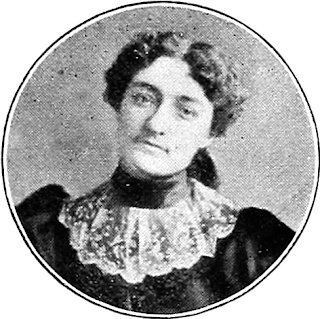

This Anne of Cleves-looking German beauty was not just one of the frivolous few early lady recording stars, she was also a company owner! As were most of these record makers in the 1890's, she owned her own label from 1898-1899, which was called The Lyric Phonograph company. It was, just like most of these companies, popular while it lasted, but then faded away rather quick. This was not really successful venture for her, which in most ways, is what led to her not really making any records after 1900. She faded out of the business quick, and stopped making records by the era of the gold moulded cylinder. She was influential and popular while she remained making records though, and would need to be remembered for this, as there weren't any other women in the 1890's music business that began their own record companies like she did.
Another fascinating lady I should mention is the wonderful May Irwin:
 Now she had a very interesting role in the early popularization of Rag-Time. It is a little hard to explain, because she didn't make any records until ten years after she began in performing Rag-Time songs. Around 1894, Irwin was a performer who came on stage in blackface and performed "Ethiopian songs"(which was essentially the pre-cursor to "Coon Songs"), and starring in some comic opera. She became famous for her roles in big opening shows on broadway and on popular vaudeville stages. When Rag-Time came by storm from the genius of Ben Harney in 1896, Irwin became the first to introduce these songs in "Ragged time" along with Josephine Sabel:
 Sable and Irwin became associated with Rag-Time starting in 1896, and in fact, Sabel's song was "Hot Time on the Old Town", and Irwin's was "The Bully". Sabel was pictured on many pieces of Rag-Time music from 1896 to 1913, which is quite a long period of time for being known as a Rag singer! Irwin had something along with her that Sabel did not, a great ability to write music. Irwin wrote several songs in her long-spanning career, which some were Rag-Time related, while others were not exactly Rag-Time, but were still very funny comic songs. Ben Harney was pleased to know that a popular lady singer(Irwin) was singing all of his Rag-Time songs, and was becoming known for them, further popularizing Harney, and Rag-Time itself, all before 1897. Of course, Irwin came across Len Spencer some time in 1896 and told him how great she thought his recordings of her songs were, and Spencer probably heard her perform these songs, so it is likely that he imitated her somewhat.
Now to close off, I must mention the strong-hearted Etta Hylands. Etta was also a rare breed of Victorian lady, one who wasn't an outward feminist, but was a lady who proved that she wasn't a slave to any man that came her way. She had hard luck with men at first, as her first husband died of smallpox just a few months into their marriage, but at that, it is very likely that she married once more soon after that. With her very sharp wits, she became tired of many men, and probably had a beaux aside from her husband in each of her marriages. One of her children was illegitimate anyhow, so something like that wouldn't be very surprising at this. She must have been a very unconventional wife of the 1890's and 1900's, as she was a performer, and had many reckless ways. She was the kind of lady that many comic songs of the late-1890's poked fun at, such as this one by Dan Quinn here:
https://archive.org/details/colnyp-5121
Very good recording by the way! Fred Hylands is behind Quinn here.
Many of these performers' wives were like the "Flossy" in the song listed above. Hylands' wife Marie was one:
 Staying out late for shows, and sleeping all day while Freddy went to the studio. That's actor's hours for ya. Not many of the recording stars had performers as their wives, like Len Spencer or Vess Ossman, but some did, like Billy Golden. Golden's wife May was actually a minstrel along with Billy, and they did quite a lot of vaudeville together in the late-1880's and early 1890's, which must have been very great to see! Another example of this would be the Watson's. By this, I mean George and Marguerite:


The Spencer's had come to know Barton by the end of the civil war, and since this was so, it is not really surprising that Madame Barton probably held baby Len Spencer, or Harry a few years later. It is also very likely that Len grew up knowing Barton very well, occasionally seeing her come to their home or the Spencer College that was at that time run by their father Henry Caleb Spencer. Spencer's mother Sara Andrews was another fascinating woman of the nineteenth century, who was a rare breed of wealthy women in that time. Sara was a very passionate suffragette in the 1870's(which was the second wave of the women's suffrage movement, the other two were the 1840's and the 1910's), speaking at conventions and in great halls about the right for women to vote. In fact, in 1875, she, along with about 50 other women, registered to vote, but this was declined by the poll owners, for obvious reasons. With this failure, she still went onward with her protests.
It wasn't just his mother and Clara Barton who he saw as the most influential women around him, he also saw many aunts of his who were very influential professors of law and even judges. If you look up the Spencer family(starting with Len), you will find that all the women in his family had some kind of higher education, degrees, or were prominent suffragettes. Not one lady in that family was just a housewife.
Now another lady I would like to speak of is the very rarely mentioned Estella Mann:

(Anne of Cleves, c.1539)
Come on! She does very much look like Anne Of Cleves! Don't tell me you don't see it.
Another fascinating lady I should mention is the wonderful May Irwin:


Now to close off, I must mention the strong-hearted Etta Hylands. Etta was also a rare breed of Victorian lady, one who wasn't an outward feminist, but was a lady who proved that she wasn't a slave to any man that came her way. She had hard luck with men at first, as her first husband died of smallpox just a few months into their marriage, but at that, it is very likely that she married once more soon after that. With her very sharp wits, she became tired of many men, and probably had a beaux aside from her husband in each of her marriages. One of her children was illegitimate anyhow, so something like that wouldn't be very surprising at this. She must have been a very unconventional wife of the 1890's and 1900's, as she was a performer, and had many reckless ways. She was the kind of lady that many comic songs of the late-1890's poked fun at, such as this one by Dan Quinn here:
https://archive.org/details/colnyp-5121
Very good recording by the way! Fred Hylands is behind Quinn here.
Many of these performers' wives were like the "Flossy" in the song listed above. Hylands' wife Marie was one:
Heh, what a couple...
Now pretty much nothing is known about Marguerite, except the fact that she was married to George Watson the yodeler, and that she made some comic cylinders in the late-1890's for Edison. Now it's rare to find a married couple of recording artists in the 1890's, but the Watson's were one rare example. Later there was Burt Green and Irene Franklin, but that was much later in time. For those wives of these recording stars who are forgotten, they all must have been interesting ladies, as they lived with performers in a very hard and taxing business. Most of them stayed completely out of it, but some were either fully involved(like Marguerite), or were slightly part of the action(like Marie Hylands). I really wonder what some of their wives were like. Len Spencer's
"Liz", Ossman's Eunice, Frank Banta's Elizabeth Riley, and all the other respectable ladies that went through so much with these wild studio men.
I hope you enjoyed this!

